
Have you ever wondered what truly defines a Labrador Retriever? Beyond their wagging tails and friendly faces, a unique blend of Labrador Retriever behavior and distinct Labrador personality traits truly defines this beloved breed. Understanding these characteristics is essential for building a harmonious, fulfilling relationship with your canine companion.
The Enduring Appeal of Labradors
The Labrador Retriever has consistently captured the hearts of dog lovers worldwide, holding the top spot as the most popular dog breed in the United States for an astounding 31 consecutive years, until 2022. This enduring appeal is no accident; it is a testament to their remarkable combination of intelligence, trainability, and an exceptionally friendly disposition.

These qualities make them exceptional companions for families and individuals alike. Their gentle temperament allows them to excel in diverse roles—from vital assistance and search and rescue dogs to comforting therapy animals—all while being cherished family pets. American Kennel Club
What to Expect from This Comprehensive Guide
This comprehensive guide will explore in depth the typical Labrador Retriever behavior and Labrador personality traits. We will examine their core temperament, shed light on common behavioral patterns from puppyhood through adulthood, and provide practical, evidence-based advice on training and managing their behavior.
Our goal is to empower you with the knowledge to foster a truly harmonious and joyful relationship with your Labrador. We will cover everything from early challenges to recognizing when professional help might be needed.
Key Takeaways
Key Takeaways:
- Labradors are consistently popular due to their friendly, intelligent, and versatile nature.
- They excel as family pets and in various working roles, showcasing their adaptability.
- This guide offers comprehensive insights into Labrador behavior, training, and management strategies.
The Core Labrador Temperament: What Makes a Lab a Lab?
To truly understand Labrador temperament and the unique Labrador personality traits that shape their Labrador Retriever behavior, we must look back at their origins. Their history is more than a story; it is a blueprint for their modern-day characteristics.
The Breed’s Origins and Purpose: Shaping Behavior
The Labrador Retriever’s story begins in Newfoundland, Canada, in the 1830s. Here, they were bred not for show, but for demanding work, assisting local fishermen. Their primary role involved retrieving nets, lines, and fish from the frigid waters of the North Atlantic.

This demanding environment and specific job shaped their physical attributes and innate behaviors. Their thick, water-resistant double coat, powerful otter-like tail, and distinctive webbed feet are all adaptations for superior swimming. Crucially, their ‘soft mouth’ was developed to retrieve game, such as ducks, without causing damage—a trait that remains strong today. American Kennel Club
This working heritage instilled in them a powerful drive to retrieve, an inherent eagerness to please their human partners, and a remarkable tolerance for cold water—all foundational to their modern temperament and behaviors.
Defining Key Labrador Personality Traits
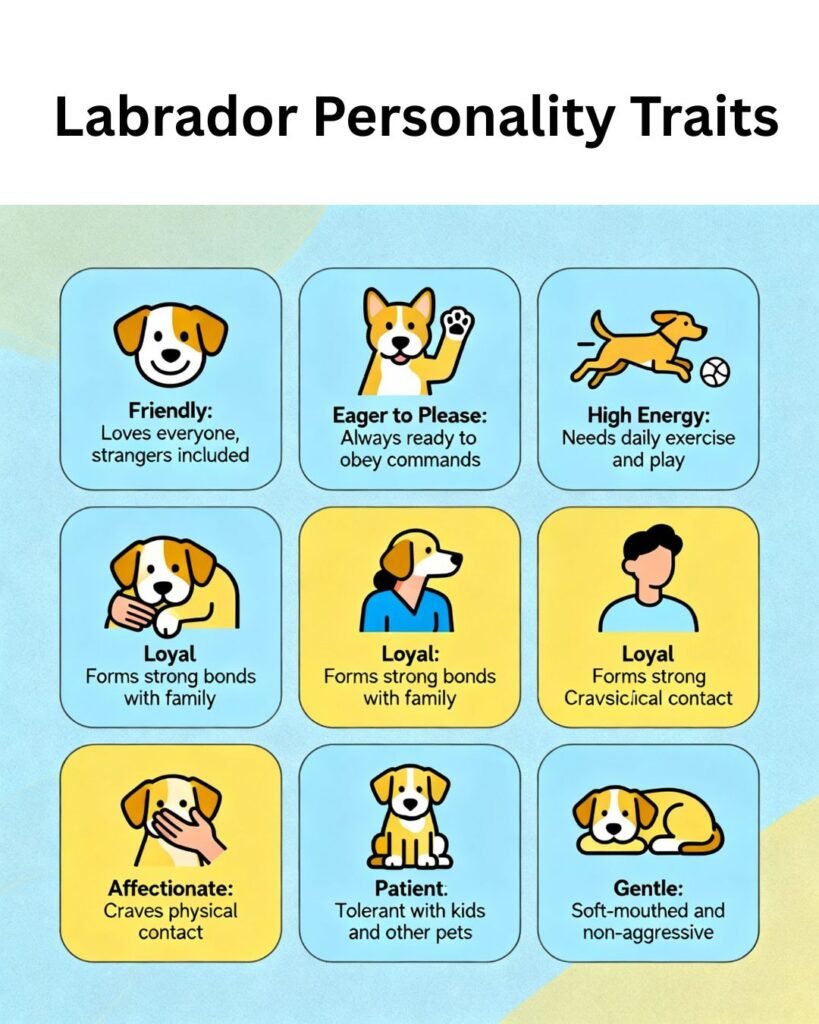
Friendly and Sociable Nature: The Ultimate Companion
Labradors are perhaps best known for their exceptionally outgoing and friendly demeanor. They typically greet strangers with an enthusiasm that can sometimes be overwhelming, and they are generally excellent with children and other animals, provided they receive proper socialization from a young age.
This inherently sociable nature means they are not suited for solitary living or as guard dogs; a Labrador is far more likely to welcome an intruder with a wagging tail than to deter them. Their desire for companionship is profound, making them the ultimate companion. Cornell University College of Veterinary Medicine
Eagerness to Please and High Trainability
One of the most defining Labrador personality traits is their strong desire to please their owners. This inherent trait, coupled with their keen intelligence, makes them remarkably trainable. Labradors respond exceptionally well to positive reinforcement training methods, quickly grasping new commands and tasks.
This high trainability is precisely why they are frequently chosen for demanding and critical roles, such as guide dogs for the blind, service dogs for individuals with disabilities, and specialized detection dogs for various agencies. American Kennel Club
High Energy Levels and Unwavering Playfulness
While their gentle nature is often highlighted, it is crucial to understand that Labradors, especially in their younger years, possess high energy levels. They are not couch potatoes by nature; they require substantial daily exercise, typically at least 60-90 minutes of vigorous activity, to prevent boredom and the development of destructive behaviors.
Their playful nature is not merely a puppy phase; it often extends well into adulthood, making them enthusiastic participants in games of fetch, swimming, and other interactive activities. Remember: a tired Lab is a well-behaved Lab. ASPCA
Loyalty and Affection: Building Strong Bonds
Labradors are renowned for forming deep, affectionate bonds with their families. They thrive on companionship and genuinely enjoy being part of household activities, often following their owners from room to room. Their loyalty is unwavering, and they frequently display their affection through physical closeness, leaning against their owners, or offering gentle nudges.
This strong attachment, while endearing, can predispose them to separation anxiety if not properly managed through training and gradual acclimatization to alone time. American Veterinary Medical Association
Patience and Gentleness: Ideal Family Dogs
The patient and gentle disposition of Labradors makes them excellent family dogs, particularly in homes with children. They are generally tolerant of the boisterousness and sometimes clumsy interactions of young children, though supervision is always recommended to ensure safety for both dog and child.
This remarkable trait also contributes significantly to their success as therapy dogs, where their calm and comforting presence can provide immense emotional support to individuals in need. American Kennel Club
Common Misconceptions About Labrador Temperament
Despite their popularity, several common misconceptions surround Labrador temperament. One prevalent misconception is that Labradors are inherently calm and require minimal training. While they are intelligent and eager to please, their high energy levels and strong retrieving instincts mean they require consistent training, early socialization, and ample physical and mental stimulation to mature into well-behaved adults.
Without these elements, they can easily develop undesirable behaviors, such as excessive chewing, digging, or hyperactivity. Another myth is that all Labradors are natural swimmers; while many enjoy water, some may need a gentle introduction and positive experiences to become comfortable and confident. ASPCA
| Misconception | Reality |
|---|---|
| Labradors are always calm. | They have high energy, especially when young, requiring 60-90 minutes of vigorous daily activity. |
| They need minimal training. | Their intelligence and strong instincts require consistent training, early socialization, and mental stimulation. |
| All Labradors are natural swimmers. | Many enjoy water, but some need gentle introduction and positive experiences to become comfortable. |
| They are perfect guard dogs. | Their friendly nature makes them more likely to welcome intruders than deter them. |
Key Takeaways
Key Takeaways:
- Labradors originated as working retrievers in Newfoundland, influencing their strong drive and ‘soft mouth’ trait.
- Key Labrador personality traits include friendliness, eagerness to please, high energy, loyalty, affection, patience, and gentleness.
- They require significant daily exercise and consistent training to effectively manage their energy and innate instincts.
- Common misconceptions include assuming they are always calm or naturally proficient swimmers without effort or exposure.
Understanding Common Labrador Retriever Behaviors
From their boisterous puppy days to their more mature adult years, Labrador Retriever behavior evolves. Understanding these typical patterns, including common Lab behaviors and specific Labrador puppy behavior, is essential for proactive management and effective training.
Labrador Puppy Behavior: The Early Years
The first few months of a Labrador’s life are a period of rapid growth, learning, and boundless energy. Understanding and guiding their natural puppy behaviors is crucial for their healthy development.
Nipping and Chewing: Managing Oral Exploration
Labrador puppies, much like human infants, explore their world primarily with their mouths. Nipping is a natural part of puppy play and communication, while chewing is essential for relieving discomfort from erupting teeth and exploring different textures.

To effectively manage this natural oral exploration, provide a wide variety of appropriate chew toys, such as durable rubber toys, dental chews, and puzzle toys. When your puppy nips you, redirect their attention immediately to an acceptable toy. You can also teach bite inhibition by yelping loudly when nipped, then immediately withdrawing attention and ignoring the puppy for a short period. This teaches them that hard bites end playtime. ASPCA
House Training Challenges and Solutions
House training a Labrador puppy requires consistency, patience, and a predictable routine. Puppies typically need to relieve themselves every two to four hours, especially immediately after waking up, after eating or drinking, and before bedtime. Establishing a consistent schedule is paramount.

Take your puppy to their designated potty spot frequently, and generously reward successful elimination with enthusiastic praise and high-value treats. Crate training can be highly effective for house training, as dogs are naturally reluctant to soil their sleeping area. Ensure the crate is appropriately sized, allowing them to stand, turn around, and lie down comfortably, but not so large that they can use one end as a bathroom. The Humane Society of the United States
Crucial Socialization Needs for a Well-Adjusted Adult
Early socialization is the most critical component for raising a well-adjusted Labrador. This critical window, ideally between three and 16 weeks of age, is when puppies form their foundational understanding of the world. Expose your puppy to a wide variety of sights, sounds, people (of all ages, sizes, and appearances), and other vaccinated, friendly dogs in a positive, controlled manner.

Puppy classes are an excellent way to facilitate safe socialization and introduce early training concepts. A lack of proper socialization during this critical period can lead to fear, anxiety, or even aggression in adulthood, making it a non-negotiable aspect of responsible puppy raising. American Veterinary Society of Animal Behavior (AVSAB)
High Energy Play: Channeling Puppy Enthusiasm
Labrador puppies are bundles of boundless energy. Providing ample opportunities for appropriate play is vital for channeling this enthusiasm constructively. Engage them in short, frequent games of fetch; supervised tug-of-war with clear rules (e.g., the game stops if teeth touch skin); and interactive toys that encourage problem-solving.
Mental stimulation through puzzle feeders and short, engaging training sessions is equally important to tire them out mentally, which can be as effective as physical exercise. Remember to avoid over-exercising young puppies, as their joints are still developing; short, frequent play sessions are always better than long, strenuous ones. American Kennel Club
Adult Lab Behaviors: What to Expect
As Labradors mature, some puppy behaviors subside, while others evolve or become more pronounced, often rooted in their breed history.
The “Labrador Mouth”: Carrying and Mouthing Objects
The term “Labrador Mouth” refers to their breed-specific tendency to carry objects gently in their mouths without chewing or damaging them. This is a direct remnant of their retrieving heritage, where they were bred to carry game softly. This behavior can manifest as carrying toys, leashes, or even various household items.

While often benign and endearing, it is important to ensure they are not carrying anything dangerous, toxic, or valuable. Providing a consistent supply of appropriate chew toys and redirecting this behavior to acceptable items can help manage it effectively. American Kennel Club
Counter Surfing and Food Motivation: A Constant Battle
Labradors are highly food-motivated—a trait that can lead to persistent behaviors like counter surfing. Their keen sense of smell and opportunistic nature drive them to seek out any accessible food.
To prevent counter surfing, diligent management is key: keep all food off counters; use child locks on cabinets containing tempting treats; and consistently teach and reinforce a strong “leave it” command. This can be a constant battle, but consistency in training and management will yield results. ASPCA
Digging Tendencies: Instinct or Boredom?
Digging can be an instinctive behavior for Labradors, particularly if they are bored, seeking cooler ground in warm weather, attempting to bury treasures, or simply enjoying the act of digging. If digging becomes problematic, it is crucial to assess their daily exercise and mental stimulation.
Often, an understimulated Lab will find its own entertainment. Consider providing a designated digging area, such as a sandbox, and bury toys or treats there to encourage appropriate digging. Increase daily walks, playtime, and incorporate puzzle toys to alleviate boredom and redirect their energy.
Barking: Understanding the Whys and Hows
Labradors can bark for a variety of reasons, including alert barking (at perceived threats or visitors), attention-seeking, boredom, anxiety, or sheer excitement. Understanding the specific trigger for your Labrador’s barking is key to effective management.

For attention-seeking barking, the most effective strategy is to completely ignore the barking and reward quiet behavior. For alert barking, teach a “quiet” command. Ensure they receive adequate physical exercise and mental stimulation to reduce boredom-related barking, as a tired dog is often a quiet dog. ASPCA
Separation Anxiety Indicators and Prevention
Labradors’ strong bond with their families can make them prone to separation anxiety when left alone. Indicators can include destructive chewing (especially around exits like doors and windows); excessive barking or howling; inappropriate urination or defecation inside the house; and pacing or panting excessively when left alone.
Prevention involves gradually accustoming them to alone time, providing engaging long-lasting toys (like a stuffed Kong), and avoiding overly dramatic departures and greetings. In severe cases, where these strategies are insufficient, professional help from a veterinary behaviorist is highly recommended.
Excessive Licking: Causes and Management
Excessive licking can stem from two main categories: medical or behavioral causes. Medical reasons can include allergies, pain (e.g., joint pain), skin infections, or parasites. Therefore, a veterinary check-up is always the crucial first step to rule out any underlying physical discomfort.
If medical causes are excluded, behavioral reasons, such as anxiety, boredom, attention-seeking, or even obsessive-compulsive disorder, might be at play. If behavioral, address underlying anxiety or boredom with increased exercise, mental stimulation, and training. It is also important to avoid inadvertently rewarding licking with attention, as this can reinforce the behavior.
Addressing Problematic Behaviors: An Overview
Addressing problematic Labrador Retriever behavior requires a multifaceted approach. This includes careful environmental management to prevent undesirable behaviors, consistent positive reinforcement training to teach alternative actions, and a deep understanding of the root cause of the behavior.
Early intervention is always best, as behaviors become more ingrained over time. For persistent or severe issues, consulting a veterinarian or a certified professional dog behaviorist is essential to develop a tailored and effective plan.
Key Takeaways
Key Takeaways:
- Puppy behaviors like nipping, chewing, and house training require consistent management, redirection, and positive reinforcement.
- Early and thorough socialization (3-16 weeks) is critical for a well-adjusted adult Labrador.
- Adult common Lab behaviors include the “Labrador Mouth,” counter surfing due to food motivation, digging, and various forms of barking.
- Be vigilant for signs of separation anxiety and excessive licking, which can be medical or behavioral.
- Addressing problematic Labrador Retriever behavior requires understanding, consistent training, environmental management, and sometimes professional help.
Nurturing Positive Labrador Behavior Through Training and Environment
Nurturing positive Labrador Retriever behavior is an ongoing journey that combines effective Labrador training tips with a stimulating and safe environment. Ultimately, it is about setting your Lab up for success.
Essential Labrador Training Tips for Success
Training a Labrador is a rewarding experience, thanks to their intelligence and eagerness to please. Here are key strategies for success:
Early Socialization and Puppy Classes: Building Foundations
As emphasized earlier, early socialization, ideally between three and 16 weeks of age, is foundational for a well-adjusted Labrador. Puppy classes offer a controlled and safe environment for puppies to interact positively with peers and various people, learn basic manners, and build confidence.

These classes also provide invaluable guidance for owners on implementing positive reinforcement techniques and effectively managing common puppy behaviors. This early investment pays dividends throughout your dog’s life.
Positive Reinforcement Techniques: Rewarding Good Behavior
Labradors respond exceptionally well to positive reinforcement, which is the most effective and humane training method. This technique involves immediately rewarding desired behaviors with high-value treats, enthusiastic praise, or favorite toys.
[IMAGE: An owner giving a treat to a Labrador who has just performed a ‘sit’ command, with a happy and engaged expression on both dog and owner. Focus on positive interaction.]
This method not only makes training enjoyable for your Labrador but also strengthens the bond and trust between you. Avoid punishment-based methods, as they can create fear, anxiety, and damage the trust you are working to build.
Consistency and Patience: The Keys to Effective Training
Consistency is paramount in any training regimen. Every member of the household must use the same commands, hand signals, and rules to avoid confusing the dog. For example, if one person allows jumping and another doesn’t, your Lab will struggle to understand expectations.
Patience is equally important; learning takes time, and setbacks are a normal part of the process. Short, frequent training sessions (five to 10 minutes) are more effective than long, infrequent ones, as they keep your Labrador engaged and prevent boredom.
Basic Obedience Commands: Sit, Stay, Come, Heel
Mastering basic obedience commands is crucial for your Labrador’s safety, control, and good manners. These commands form the bedrock of good Labrador Retriever behavior:
- “Sit” and “Stay”: These commands provide essential control in various situations, from waiting patiently at the door to remaining calm during greetings.
- “Come” (Recall): A reliable recall is vital for off-leash safety, ensuring your Labrador returns to you promptly, especially in potentially dangerous situations.
- “Heel” or Loose-Leash Walking: This ensures enjoyable walks for both of you, preventing pulling and making outings a pleasure, not a chore.
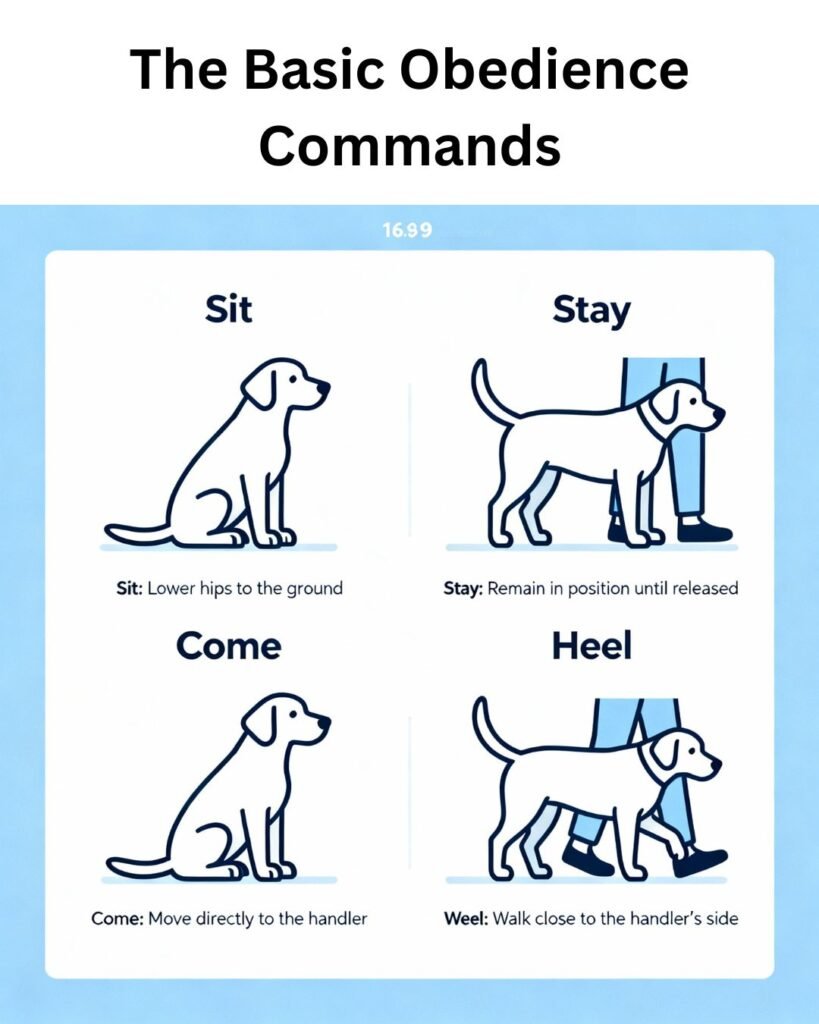
Practice these commands in different environments and with increasing distractions to generalize your Labrador’s understanding, ensuring they respond reliably wherever you go. American Kennel Club
Leash Training: Enjoyable Walks for Both of You
Start leash training early with a comfortable, well-fitting collar or harness. The goal is loose-leash walking, where your Labrador walks politely beside you without pulling. Reward your Labrador generously for walking with a slack leash.
If they pull, simply stop walking until the leash slackens; then continue. This teaches them that pulling gets them nowhere. Avoid yanking or punishing, as this can create negative associations with the leash and walking, making the experience unpleasant for both of you. ASPCA
The Importance of Mental and Physical Stimulation
A well-exercised and mentally stimulated Labrador is a happy, well-behaved Labrador. Neglecting these needs can lead to a range of behavioral problems.
Meeting Daily Exercise Requirements
Labradors require significant physical exercise to thrive, typically 60-90 minutes of vigorous activity daily. This can include brisk walks, running, swimming (a favorite for many Labs), or energetic games of fetch. Insufficient exercise is a common cause of hyperactivity, destructive behaviors, and weight gain.
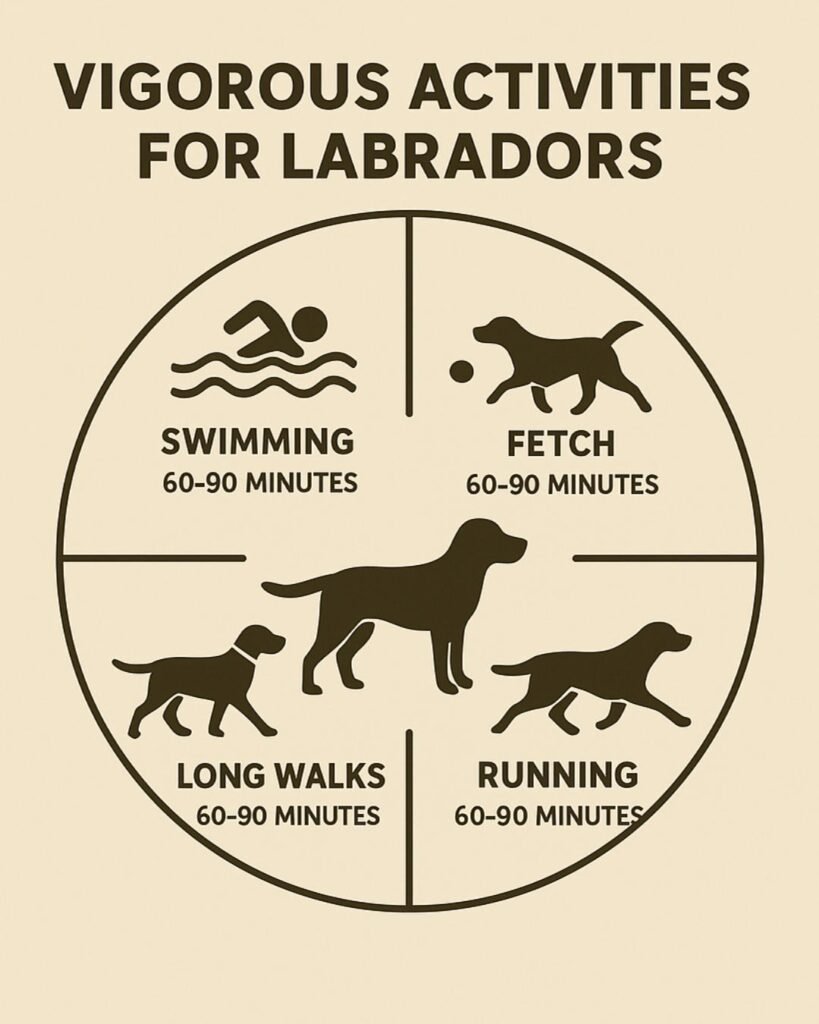
Always adjust the intensity and duration of exercise based on your Labrador’s age, health, and individual energy levels, consulting your vet for guidance—especially for puppies or senior dogs.
Interactive Toys and Puzzle Feeders: Engaging Their Minds
Mental stimulation is as important as physical exercise for intelligent breeds like Labradors. Interactive toys, such as Kongs stuffed with peanut butter or kibble; snuffle mats; and puzzle feeders, challenge their minds, prevent boredom, and can also slow down fast eaters.
These tools are invaluable for keeping your Labrador engaged when you cannot actively play with them and can be particularly helpful in managing separation anxiety by providing a positive distraction.
Scent Work and Fetch Games: Tapping into Natural Instincts
Engaging your Labrador’s natural retrieving and powerful scenting instincts is a fantastic way to provide physical and mental stimulation. Games of fetch are excellent for burning off physical energy and satisfying their innate retrieve drive.
Scent work, such as ‘find it’ games where you hide treats or toys for them to locate, provides significant mental stimulation and can be done indoors or outdoors, tapping into their incredible sense of smell. These activities are not only fun but also build confidence and reinforce their natural abilities.
Creating a Safe and Enriched Home Environment
A safe and enriched home environment is fundamental for your Labrador’s overall well-being and positive Labrador Retriever behavior. This includes thoroughly dog-proofing your home to remove potential hazards; providing a comfortable and secure resting place (like a crate or a cozy dog bed); and ensuring constant access to fresh water and appropriate chew toys.

Establishing a predictable daily routine also contributes significantly to a sense of security and can help reduce anxiety in your Labrador.
Key Takeaways
Key Takeaways:
- Early socialization and puppy classes are foundational for positive Labrador Retriever behavior.
- Positive reinforcement is the most effective and humane training method for Labradors.
- Consistency in commands and rules, along with patience, are vital for successful training outcomes.
- Mastering basic obedience commands (Sit, Stay, Come, Heel) and proper leash training ensures safety and enjoyable interactions.
- Daily physical exercise (60-90 minutes) and mental stimulation are crucial for preventing boredom and destructive behaviors.
- Interactive toys, puzzle feeders, scent work, and fetch games effectively engage their natural instincts and minds.
- A safe, dog-proofed, and enriched home environment supports their overall physical and mental well-being.
When to Seek Professional Help: Recognizing Behavioral Issues
While many common Lab behaviors can be managed with consistent training and environmental enrichment, there are times when a Labrador’s Labrador Retriever behavior indicates a deeper issue requiring professional intervention. Recognizing these signs early is crucial.
Identifying Signs of Stress or Anxiety in Your Lab
Being able to identify signs of stress or anxiety in your Labrador early can prevent behavioral issues from escalating. These signs are often subtle but can include:
- Excessive panting (when not hot or exercising)
- Drooling
- Repetitive yawning
- Lip licking
- A tucked tail
- Flattened ears
- Trembling
- Pacing
- Hiding or actively avoiding interaction
- Changes in appetite or sleep patterns
- A sudden regression in house-training habits
If your Labrador persistently displays these signs, it warrants immediate attention.
Persistent Destructive Behaviors: Beyond Normal Chewing
While some chewing is normal, especially for puppies, persistent and severe destructive behaviors in an adult Labrador often signal underlying issues. This can include:
- Chewing on furniture, walls, or doorframes
- Excessive digging in the yard
- Self-mutilation (e.g., excessive licking leading to hot spots)
These behaviors frequently point to boredom, anxiety (particularly separation anxiety), or insufficient physical exercise and mental stimulation. If these behaviors are not resolved with increased enrichment, exercise, and consistent positive training, professional intervention may be necessary to diagnose and address the root cause. ASPCA
Aggression or Fear-Based Reactions: Understanding the Root Cause
Any signs of aggression, such as growling, snapping, or biting, or extreme fear-based reactions, such as severe trembling, persistent hiding, or panic attacks, are serious and require immediate professional attention. Aggression can stem from various sources, including:
- Fear
- Pain
- Resource guarding (protecting food or toys)
- Territoriality
- A lack of proper socialization
It is paramount to have a veterinarian first rule out medical causes for pain or discomfort, as physical ailments can often manifest as behavioral changes. Once medical issues are excluded, a certified professional dog behaviorist can help identify specific triggers and develop a humane and effective behavior modification plan.
Consulting a Veterinarian or Certified Dog Behaviorist
It is always recommended to consult your veterinarian first for any new or escalating behavioral issues. Your vet can perform a thorough examination to rule out medical conditions that may be causing or contributing to the behavior.
If no medical cause is found, or if the issue is complex, your veterinarian can refer you to a board-certified veterinary behaviorist or a certified professional dog trainer (CPDT) or certified applied animal behaviorist (CAAB). These professionals possess specialized knowledge and extensive experience to accurately diagnose and treat behavioral problems using humane, evidence-based methods, ensuring the best possible outcome for your Labrador.
Key Takeaways
Key Takeaways:
- Recognize signs of stress or anxiety, such as excessive panting, lip licking, or changes in appetite and house-training habits.
- Persistent destructive behaviors beyond normal chewing often indicate deeper issues like boredom, anxiety, or insufficient stimulation.
- Any signs of aggression or extreme fear require immediate professional intervention.
- Always consult a veterinarian first to rule out medical causes for behavioral changes.
- Seek guidance from a board-certified veterinary behaviorist or certified professional dog trainer for complex or severe behavioral issues.
Conclusion: A Lifelong Bond with Your Labrador
The journey of sharing your life with a Labrador Retriever is one of immense joy, companionship, and continuous learning. By understanding and embracing their unique characteristics, you lay the foundation for a truly remarkable bond.
Embracing the Unique Labrador Personality
Embracing the unique Labrador personality means appreciating their boundless energy, unwavering loyalty, playful spirit, and deeply affectionate nature. Understanding their breed-specific traits, such as their strong retrieving drive and strong food motivation, allows owners to channel these instincts positively and proactively manage potential challenges.
Their inherent desire to please, combined with their keen intelligence, makes them incredibly rewarding companions when their fundamental needs for consistent exercise, mental stimulation, and positive training are met. This understanding transforms potential challenges into opportunities for growth and deeper connection.
The Rewards of Understanding and Patience
The journey with a Labrador Retriever is undoubtedly filled with joy, but it also requires commitment, deep understanding, and patience. By investing time and effort in early socialization, implementing consistent positive reinforcement training, and providing a stimulating and safe environment, owners can prevent many common behavioral issues.
The rewards of this dedication are profound: a well-adjusted, confident, and loving companion who will enrich your life in countless ways for years to come. Your patience and effort will be repaid tenfold in loyalty and affection.
Final Thoughts on Your Lab’s Journey
Your Labrador’s journey from an energetic puppy to a cherished adult is a true partnership. It involves continuous learning, adapting to their evolving needs as they age, and confidently seeking professional guidance when necessary.
The bond you build through mutual respect, clear communication, and unwavering understanding will be one of the most fulfilling and enduring aspects of sharing your life with this remarkable breed. Enjoy every moment of your Lab’s incredible journey.
Key Takeaways
Key Takeaways:
- Embrace your Labrador’s unique Labrador personality traits, including their energy, loyalty, playfulness, and strong retrieving drive.
- Understanding their needs and providing consistent training and stimulation leads to a rewarding and harmonious relationship.
- Patience, early socialization, and positive reinforcement are key to raising a well-adjusted and confident companion.
- The journey with a Labrador is a lifelong partnership built on mutual understanding, respect, and continuous care for their Labrador Retriever behavior.
Frequently Asked Questions
01. What are the core personality traits of a Labrador Retriever?
Labradors are known for being exceptionally friendly and sociable, eager to please, highly trainable, and possessing high energy levels. They are also loyal, affectionate, patient, and gentle, making them excellent companions and family dogs. Their retrieving heritage also gives them a strong drive to retrieve and a “soft mouth.”
02. How much exercise does a Labrador Retriever need daily?
Labradors, especially when young, have high energy levels and require substantial daily exercise. Typically, they need at least 60 to 90 minutes of vigorous activity each day, which can include brisk walks, running, swimming, or energetic games of fetch. This prevents boredom and destructive behaviors.
03. What are common behavioral challenges in Labrador puppies and how can I manage them?
Labrador puppies commonly exhibit nipping and chewing as they explore their world; manage this by providing appropriate chew toys and redirecting their attention. House training requires consistency, patience, and a predictable routine, often aided by crate training. Early and thorough socialization (three to 16 weeks) is crucial to prevent fear or anxiety in adulthood, exposing them to diverse sights, sounds, people, and friendly dogs.
04. Why do Labradors tend to carry objects in their mouths, and is it a problem?
Labradors have a breed-specific tendency known as the “Labrador Mouth,” where they gently carry objects without chewing or damaging them. This trait comes directly from their retrieving heritage, where they were bred to carry game softly. While often endearing, ensure they are not carrying anything dangerous or valuable, and provide plenty of appropriate chew toys to redirect this natural behavior.
05. When should I seek professional help for my Labrador’s behavior?
You should seek professional help if your Labrador shows persistent signs of stress or anxiety (e.g., excessive panting, lip licking, hiding); engages in severe destructive behaviors beyond normal chewing; or exhibits any signs of aggression (growling, snapping, biting) or extreme fear-based reactions. Always consult your veterinarian first to rule out medical causes, then consider a board-certified veterinary behaviorist or certified professional dog trainer for complex issues.