Have you ever wondered what truly defines a Labrador Retriever? Beyond their friendly demeanor and wagging tails, a precise blueprint—the Labrador Retriever breed standard—outlines the ideal characteristics of this beloved breed. Understanding these standards is crucial for prospective owners, breeders, and enthusiasts alike. It ensures the preservation of the breed’s unique qualities, whether the dog serves as a family companion, a working animal, or a dedicated service dog.
What is a Breed Standard?
A breed standard is a comprehensive description of the ideal purebred dog, encompassing its physical traits, temperament, and movement. Developed by national kennel clubs like the American Kennel Club (AKC) and The Kennel Club (UK), it serves as a blueprint for breeders. This blueprint helps maintain a breed’s integrity, health, and functional purpose. For the Labrador Retriever, the standard emphasizes traits reflecting its original role as a retrieving gun dog, including a strong build, a weather-resistant coat, and an eager-to-please temperament .
Why Breed Standards Matter for Labrador Retrievers
Breed standards are vital for Labrador Retrievers, as they preserve their unique characteristics and ensure future generations maintain the defining physical and temperamental traits. These traits include their renowned friendly disposition, intelligence, and athleticism, all essential for their diverse roles AKC Labaor Retriever Breed Standard. Adherence to these standards also promotes health and functional soundness. For instance, specific structural requirements like a strong back are crucial for retrieving without injury . Ultimately, standards distinguish the Labrador Retriever from other breeds, preventing the dilution of its distinct Labrador breed type.
Overview of the Ideal Labrador
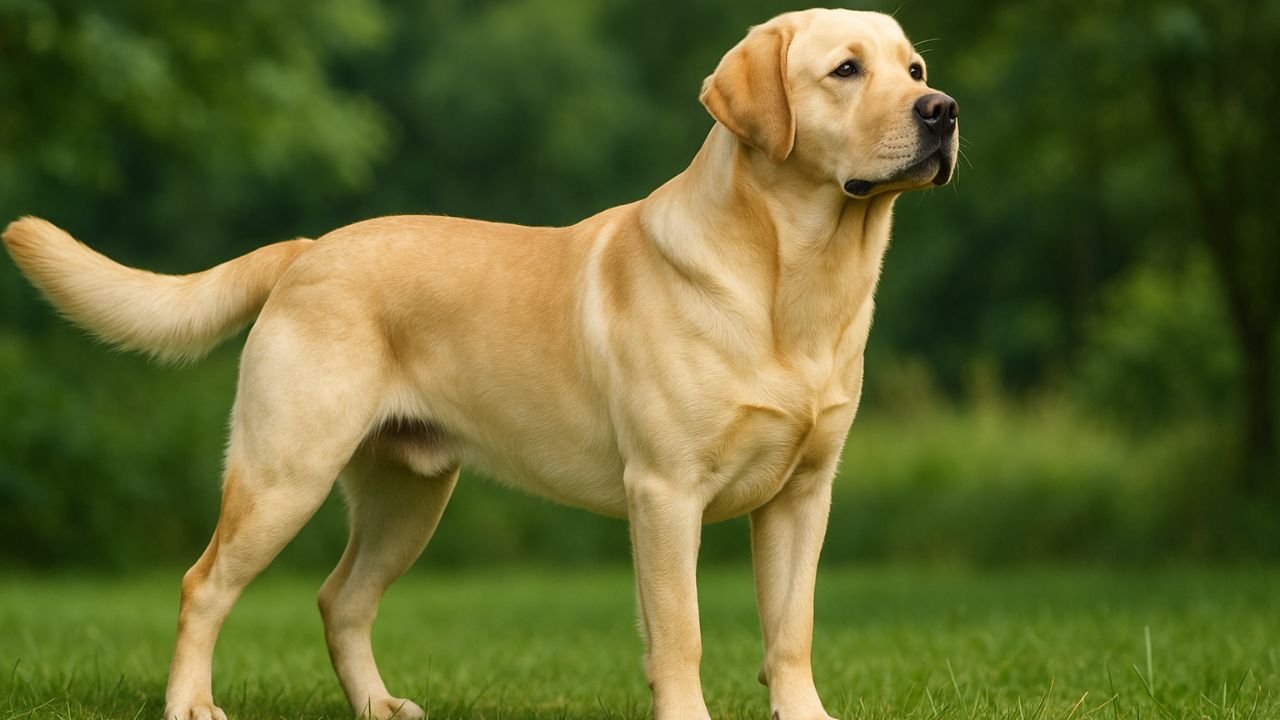
The ideal Labrador Retriever breed standard describes a medium-sized, strongly built, and active dog. Its overall appearance conveys strength, athleticism, and a kind, outgoing nature. Key physical features include a broad skull, powerful jaws, a deep chest, and a distinctive \”otter\” tail. The breed’s temperament is paramount: amiable, eager-to-please, and non-aggressive, making them excellent companions and versatile working dogs . Furthermore, their short, dense, weather-resistant coat highlights their heritage as water retrievers.
Key Takeaways
- Breed standards define the ideal physical and temperamental traits of a purebred dog.
- For Labradors, standards preserve breed integrity, promote health, and ensure functional soundness.
- The ideal Labrador is a strong, active, good-natured dog with specific physical markers and a distinctive temperament.
Historical Context and Evolution of the Labrador Standard
Understanding the Labrador Retriever breed standards requires examining their rich history, which profoundly shaped their modern characteristics.
Origins of the Labrador Retriever
The Labrador Retriever originated in Newfoundland, Canada, during the early 19th century, descending from the St. John’s Water Dog. These robust working dogs assisted local fishermen, retrieving nets and fish in icy waters. They were renowned for their strong swimming ability, dense water-resistant coats, and gentle mouths. British noblemen, notably the Earl of Malmesbury, imported these dogs to England in the 1830s for game retrieval. The 2nd Earl was the first to refer to them as Labrador dogs
Development of Breed Standards (e.g., AKC, Kennel Club)
The breed gained recognition in England, with The Kennel Club (UK) officially recognizing the Labrador Retriever in 1903 and establishing its first breed standard. Subsequently, in the United States, the American Kennel Club (AKC) recognized the breed in 1917, adopting its own standard. While largely mirroring the British version, the AKC Labrador standards have undergone minor revisions over decades to refine descriptions and address health concerns. However, the core essence remains consistent with the breed’s working heritage.
Influence on Modern Labrador Characteristics
The Labrador’s history as a working retriever profoundly influenced its modern characteristics. Its strong, muscular build, deep chest, and powerful hindquarters are direct adaptations for swimming and carrying game. The dense, water-resistant double coat is a clear inheritance from its cold-water retrieving ancestors. Furthermore, the breed’s renowned intelligence, eagerness to please, and gentle mouth were crucial for retrieving game without damage. These traits remain highly valued in today’s Labrador Retriever breed standards.
Key Takeaways
- Labradors originated from the St. John’s Water Dog in Newfoundland, used by fishermen.
- The breed was formally recognized by The Kennel Club (UK) in 1903 and AKC in 1917, establishing initial Labrador Retriever breed standards.
- The breed’s working history directly shaped its physical traits (e.g., coat, build) and temperament (e.g., intelligence, gentle mouth).
General Appearance and Overall Conformation
The general appearance and overall Labrador conformation are critical to the breed’s functional ability and adherence to Labrador Retriever breed standards. The ideal Labrador is an athletic, well-balanced dog, specifically built for endurance and strength.
Size, Proportion, and Substance
The Labrador Retriever breed standards specify precise guidelines for size, proportion, and substance. These are crucial for maintaining the breed’s functional integrity and distinct Labrador breed type.
Height and Weight Standards (Males vs. Females)
| Characteristic | Male Labrador | Female Labrador |
|---|---|---|
| Height (at withers) | 22.5 to 24.5 inches | 21.5 to 23.5 inches |
| Weight | 65-80 pounds | 55-70 pounds |
According to the AKC Labrador standards, adult males stand 22.5 to 24.5 inches at the withers and weigh 65-80 pounds. Females measure 21.5 to 23.5 inches and weigh 55-70 pounds. Deviations exceeding half an inch are considered serious faults, as they can impact a dog’s balance and working ability.
Proportion: Square vs. Rectangular Build
The Labrador Retriever should be slightly longer than tall, meaning the distance from the withers to the tail base is slightly greater than the height at the withers. A square or overly long body is considered a fault, as it can hinder the breed’s agile and powerful movement.
Substance: Bone and Muscle Mass
Labradors require good substance, characterized by moderate bone and well-developed, powerful muscles, without appearing coarse or overly heavy. This substance contributes significantly to their strength and endurance for retrieving. Bone structure should be strong and proportionate. Conversely, a lack of substance or an overly refined appearance is considered a fault .
Balance and Symmetry
Overall balance and symmetry are critical for the Labrador. All parts of the dog should be in harmonious proportion, creating an athletic, well-put-together appearance that allows for efficient movement and functional soundness. Proper angulation in the forequarters must balance the hindquarters to ensure a smooth, powerful gait. An unbalanced dog may experience structural stress or inefficient movement, negatively impacting its Labrador physical characteristics
Key Takeaways
- Males: 22.5-24.5 inches, 65-80 lbs; Females: 21.5-23.5 inches, 55-70 lbs.
- Body should be slightly longer than tall, not square or overly long.
- Good substance means moderate bone and powerful muscles, avoiding coarseness or refinement.
- Balance and symmetry are crucial for efficient movement and functional soundness.
Temperament: The Hallmark of the Labrador Retriever
The temperament of the Labrador Retriever is arguably its most defining characteristic, and is given significant weight in Labrador Retriever breed standards. It embodies the essence of their role as both a worker and a companion.
Defining the Ideal Labrador Temperament
The AKC standard describes the ideal Labrador temperament as \”good-natured and kindly; an outgoing, tractable nature; eager to please and non-aggressive towards man or animal.This combination makes them highly adaptable to various situations and roles.
Outgoing and Amiable Nature
Labradors are known for their friendly, sociable disposition, typically greeting strangers enthusiastically and being good with children and other pets. They should exhibit a stable, confident demeanor, readily engaging with their environment and people.
Eagerness to Please and Intelligence
Their intelligence and strong desire to please contribute to their high trainability, which is crucial for success in assistance, search and rescue, detection, and therapy work. Labradors thrive on having a job and respond exceptionally well to positive reinforcement, a direct link to their retrieving heritage.
Non-Aggressive and Non-Shy Disposition
Aggression or shyness are considered serious faults in the Labrador Retriever breed standard and can even be disqualifying. A Labrador should never show unprovoked aggression or be unduly timid. Such deviations indicate a significant departure from the breed’s core essence and can pose considerable challenges.
Importance in Breed Standard
The emphasis on temperament within the breed standard reflects its critical role. While physical attributes are essential for their work, it is their temperament that makes them exceptional partners. Without their characteristic good nature, eagerness to please, and stability, a Labrador would not fulfill its intended purpose. Therefore, breeders prioritize temperament as much as physical conformation.
Key Takeaways
- Ideal temperament: good-natured, kindly, outgoing, tractable, eager to please, non-aggressive.
- Labradors are sociable, friendly, intelligent, and highly trainable.
- Aggression or shyness are serious faults, potentially disqualifying.
- Temperament is as crucial as physical conformation for the breed’s function and appeal.
Head: The Expression of the Labrador
The head of a Labrador Retriever conveys its characteristic kind and intelligent expression. Every feature, from the skull to the teeth, is meticulously outlined in the Labrador Retriever breed standards to align with the breed’s functional purpose and overall Labrador conformation.
Skull and Muzzle
The structure of the skull and muzzle are vital for both appearance and retrieving ability.
Skull: Broad, Clean-Cut
The skull should be broad and clean-cut, proportionate to the dog’s size, and free from fleshy cheeks. This broadness supports the powerful jaw structure, which is essential for retrieving. A narrow or overly domed skull is considered a fault.
Muzzle: Powerful, Not Pointed
The muzzle should be powerful and of medium length, neither pointed nor snipey, and approximately equal in length to the skull from stop to occiput. Strong jaws are necessary to carry game softly. A weak or pointed muzzle detracts from the breed’s working ability .
Stop: Moderate
The stop, the indentation between the eyes, should be moderate and clearly defined, not abrupt or exaggerated. A lack of stop or an overly pronounced stop are faults.
Eyes: Expression and Color
The eyes are crucial for conveying the Labrador’s characteristic expression.
Size, Set, and Color (Brown, Hazel)
Eyes should be medium-sized, set well apart, and neither prominent nor deep-set. Their color should be brown or hazel, with brown preferred, especially in black and yellow Labradors. Yellow or black eyes are considered undesirable. Eye rims should be black for black and yellow Labradors, and brown for chocolate Labradors .
Expression: Kind, Friendly
The expression should convey kindness, friendliness, and intelligence. This \”kind\” expression is a hallmark of the breed’s amiable temperament. Conversely, a harsh or suspicious expression is considered a serious fault .
Ears: Set and Size
The ears contribute to the overall balance and expression of the head.
Set: Moderately High, Close to Head
Ears should be set moderately high and hang close to the skull. They should be relatively short and not heavy, reaching approximately to the inner corner of the eye when pulled forward. Ears set too low or too high, or those that are overly long or heavy, are considered faults .
Size: Not Large or Heavy
Ears should not be large or heavy. Their size and placement contribute to the clean-cut appearance and do not interfere with work in dense cover .
Teeth: Bite and Dentition
Strong, healthy teeth are essential for a retrieving dog.
Scissor Bite Preferred
A scissor bite, where the upper teeth closely overlap the lower teeth, is preferred. A level bite is acceptable but considered less desirable. An undershot or overshot bite is a serious fault, as it impairs retrieving ability
Full Dentition
Labradors should possess a full complement of strong, white teeth. Missing teeth, other than first premolars, are considered a fault. Healthy, strong teeth are paramount for effective retrieving.
Key Takeaways
- Skull: Broad, clean-cut; Muzzle: Powerful, medium length, not pointed; Stop: Moderate.
- Eyes: Medium, set apart, brown/hazel, kind/friendly expression.
- Ears: Moderately high set, close to head, not large or heavy.
- Teeth: Scissor bite preferred, full dentition.
Body: Structure for Function
The Labrador Retriever’s body is designed for strength, endurance, and agility, directly reflecting its working heritage. Every component, from the neck to the tail, contributes to its functional ability and adherence to Labrador Retriever breed standards. This section details these key Labrador physical characteristics.
Neck: Strong and Powerful
The neck should be strong and powerful, of good length, setting smoothly into the shoulders, and free from throatiness. A robust neck is essential for carrying game and maintaining balance during active movement.
Topline: Level
The topline should be level from the withers to the croup when the dog is standing. A sloping, roached, or swayback topline is considered a fault, as it indicates structural weakness that hinders efficient movement and endurance.
Chest: Deep and Broad
The chest should be deep and broad, reaching to the elbows. This provides ample room for the heart and lungs, which is crucial for stamina. The ribs should also be well-sprung from the backbone .
Ribs: Well-Sprung
Well-sprung ribs are vital for optimal lung capacity and strength, extending well back for strong coupling with the loin. Flat-sided or overly rounded ribs are considered faults.
Loin: Short, Strong, and Muscular
The loin should be short, strong, and muscular, contributing to the dog’s compactness and power for efficient energy transfer. A long or weak loin is considered a serious fault in Labrador conformation .
Tail: The Otter Tail
The Labrador’s tail is a distinctive and highly functional feature.
Set, Thickness, and Taper
It should be a natural extension of the topline, set rather high, very thick at the base, and gradually tapering. Densely covered with a short, dense coat, it gives a distinctive rounded, \”otter-like\” appearance. A thin or sparsely coated tail is considered a fault.
Carriage: Not Curled Over Back
The tail should be carried gaily but must never curl significantly over the back. A slight curve is acceptable, but a tightly curled tail or one tucked between the legs is considered a serious fault. Functionally, the tail acts as a rudder for swimming and aids in balance.
Key Takeaways
- Neck: Strong, powerful, good length, free from throatiness.
- Topline: Level from withers to croup.
- Chest: Deep and broad, reaching elbows; Ribs: Well-sprung, extending back.
- Loin: Short, strong, muscular.
- Tail: Otter tail—thick at base, tapering, densely coated, carried gaily but not curled over back.
Forequarters: Strength and Reach
The forequarters are integral to the Labrador Retriever’s athletic prowess, providing both strength and reach for efficient movement. Proper angulation and bone structure, as defined by Labrador Retriever breed standards, are crucial for functional integrity and overall Labrador conformation.
Shoulders: Layback and Angulation
Shoulders should be well laid back, long, and sloping, forming approximately a 90-degree angle with the upper arm. This specific angulation allows for good reach, contributing to an efficient, effortless gait. Straight shoulders or insufficient layback restrict movement and are considered faults.
Legs: Straight, Strong Bone
Forelegs should be straight from the elbow to the ground, with strong, substantial bone, appearing parallel when viewed from the front. Weak or bowed legs are serious faults that impair working ability and correct movement.
Pasterns: Strong and Short
Pasterns should be strong and short, with a slight slope, effectively acting as shock absorbers. Weak, long, or upright pasterns are considered faults, leading to instability and potential injury.
Feet: Compact, Well-Arched Toes
Feet should be compact and round, often described as cat-like, with well-arched, tightly knit toes and well-developed pads. This structure provides excellent traction and durability for a working dog. Splayed or hare feet are considered faults, negatively impacting Labrador physical characteristics.
Key Takeaways
- Shoulders: Well laid back, good angulation (approx. 90 degrees with upper arm).
- Forelegs: Straight, strong bone, parallel when viewed from front.
- Pasterns: Strong, short, slightly sloping.
- Feet: Compact, round, well-arched toes ( cat-like ).
Hindquarters: Power and Drive
The hindquarters are the engine of the Labrador Retriever’s powerful movement, providing characteristic drive and propulsion. Adherence to Labrador Retriever breed standards in this area ensures the strength and agility required for demanding work. Understanding these Labrador physical characteristics is key to appreciating the breed’s athletic design and overall Labrador conformation.
Angulation: Well-Angulated Stifles
Hindquarters should be broad, muscular, and well-developed, providing powerful drive. Stifles (knees) should be well-angulated for strong propulsion, and this angulation must be balanced with that of the forequarters for harmonious movement.
Hocks: Strong, Well Let Down
Hocks should be strong, well let down (meaning short from hock to ground), and turn neither in nor out. This structure provides crucial stability and leverage for powerful rear drive. Cow hocks or sickle hocks are considered serious faults.
Legs: Parallel When Viewed From Rear
When viewed from the rear, hind legs should be straight and parallel, moving in line with the forelegs. This parallel movement is crucial for efficiency. Any deviation, such as hocks turning in or out, indicates structural weakness.
Feet: Similar to Forequarters
Hind feet should be compact, round, with well-arched toes and well-developed pads, mirroring the forefeet. This consistency ensures overall balance and durability across diverse terrains .
Key Takeaways
- Hindquarters: Broad, muscular, well-developed.
- Stifles: Well-angulated, balanced with forequarters.
- Hocks: Strong, well let down, straight (neither in nor out).
- Hind legs: Parallel when viewed from rear.
- Feet: Compact, round, well-arched toes.
Coat and Color: Protective and Distinctive
The Labrador Retriever’s coat is a defining characteristic, essential for its original purpose as a water retriever. The Labrador Retriever breed standards meticulously describe the ideal coat type and acceptable colors, ensuring these Labrador physical characteristics remain true to the breed’s heritage.
Coat Type: Short, Dense, Hard, Weather-Resistant
The outer coat should be short, dense, and straight, feeling rather hard to the touch. This provides crucial protection against brush and cold water. A wavy, wiry, or sparse coat is considered a fault.
Undercoat: Soft, Weather-Resistant
Beneath the harsh outer coat lies a soft, dense, weather-resistant undercoat. This undercoat is crucial for insulation, keeping the dog warm in cold water and protecting it against harsh weather. Without this specialized coat, a Labrador would be ill-equipped for traditional retrieving tasks.
Accepted Colors: Black, Yellow, Chocolate
The AKC breed standard recognizes three primary colors: black, yellow, and chocolate. Any other color or combination is considered a disqualification.
Shades within Yellow and Chocolate
Yellow can range from light cream to fox red, with no preference for shade. Chocolate can range from light to dark, with no specific shade preferred, as long as it falls within the accepted spectrum.
Small White Spot on Chest (Acceptable)
A small white spot on the chest is permissible. However, white markings elsewhere on the body are considered faults and can be disqualifying if extensive.
Key Takeaways
- Coat: Short, dense, straight, hard to the touch, with a soft, weather-resistant undercoat.
- Accepted Colors: Black, Yellow (light cream to fox red), Chocolate (light to dark chocolate).
- Small white spot on chest is acceptable; other white markings are faults or disqualifications.
Gait: Effortless and Efficient Movement
The movement, or gait, of a Labrador Retriever directly reflects its structure and functional design. Labrador Retriever breed standards emphasize a powerful and efficient gait, enabling the dog to work tirelessly. Observing a Labrador in motion reveals much about its overall Labrador conformation and athletic capabilities, highlighting key Labrador physical characteristics.
Movement: Free, Effortless, Powerful
An ideal Labrador’s gait should be free, effortless, and powerful, clearly demonstrating its athletic build. Movement should be true, with legs moving straight forward without crabbing or weaving. The dog should cover ground with minimum effort, indicating sound structure. Stiffness or awkwardness in gait is considered a fault .
Reach and Drive
Proper gait involves good reach in the forequarters and powerful drive from the hindquarters. Forelegs extend smoothly, while the hind legs propel the dog with strength. This coordinated movement allows the Labrador to work tirelessly over various terrains .
Topline: Level During Movement
The topline should remain level and firm during movement, without rolling or excessive bounce. A stable topline indicates a strong back and proper muscular development, which is essential for endurance and carrying retrieved objects. A swaying or arching topline is considered a fault.
- Gait: Free, effortless, powerful, true movement.
- Good reach in forequarters and powerful drive from hindquarters.
- Topline remains level and firm during movement.
Disqualifications and Serious Faults
Understanding deviations from the Labrador Retriever breed standards is crucial for maintaining breed integrity. Both faults and disqualifications serve to guide breeders and judges in preserving functional soundness and proper Labrador conformation.
Common Faults to Avoid
Faults are deviations that detract from a dog’s quality but are not disqualifying. Common faults include:
- a narrow head
- a snipey muzzle
- light or black eyes
- overly large or low-set ears
- an overshot or undershot bite (severe cases can be disqualifying)
- a long or weak loin
- a tail carried too high or curled
- poor angulation
- splayed feet
- and a wavy or sparse coat.
These issues can impact a Labrador’s function, health, or overall breed type.
Disqualifying Faults (e.g., Aggression, Incorrect Coat, Other Colors)
Disqualifying faults are serious deviations that render a dog ineligible for conformation showing, signifying a major departure from the breed standard. For Labradors, according to AKC Labrador standards, disqualifications include:
- Aggression or Shyness: Any unprovoked aggression or extreme shyness, paramount due to the breed’s temperament .
- Incorrect Coat: Wiry, silky, or feathered coat; the correct short, dense, weather-resistant coat is essential .
- Other Colors: Any color or combination other than solid black, yellow, or chocolate, including silver or charcoal Labradors.
- White Markings: Extensive white markings beyond a small chest spot.
- Altered Appearance: Artificial alterations (e.g., dyed coats).
- Height Deviations: Males under 22 or over 25 inches; females under 21 or over 24 inches.
Understanding Deviations from the Ideal
Understanding faults and disqualifications is crucial for breeders aiming to produce healthy, sound, and true-to-type Labradors. For prospective owners, this knowledge helps in recognizing a well-bred dog. While a pet with minor faults is perfectly acceptable, significant deviations can indicate underlying health or temperament issues, or a departure from the breed’s intended function .
Key Takeaways
- Faults are minor deviations; disqualifications are serious departures from the standard.
- Disqualifications include aggression/shyness, incorrect coat, unaccepted colors, extensive white markings, and significant height deviations.
- Understanding these helps preserve breed integrity and identify well-bred Labradors.
Conclusion: Appreciating the Ideal Labrador
The Labrador Retriever breed standards provide a meticulous blueprint for a dog that is both functionally sound and deeply cherished. This guide encapsulates the essence of what makes a Labrador exceptional, preserving a legacy of purpose, companionship, and unwavering loyalty.
Summary of Key Breed Standard Elements
The ideal Labrador Retriever is a harmonious blend of physical prowess and exemplary temperament. Key elements include a strong, athletic build with specific height and weight proportions; a broad, clean-cut head featuring kind eyes; a powerful \”otter\” tail; and a dense, weather-resistant coat in black, yellow, or chocolate. Above all, the Labrador’s hallmark temperament—outgoing, amiable, intelligent, eager to please, and non-aggressive—is central to its identity and function. Every aspect of the standard points to a dog built for retrieving, capable of enduring harsh conditions, and possessing a gentle nature.
The Importance of Preserving Breed Type
Preserving the distinct Labrador breed type is vital for the long-term health, temperament, and functional integrity of the breed. Adherence to the standard ensures Labradors continue to embody the traits that make them exceptional working dogs and companions. It guards against undesirable traits, helps maintain genetic diversity, and protects the breed’s legacy. Responsible breeding, guided by the standard, actively works to avoid health issues stemming from extreme characteristics or diluted temperaments.
Finding a reputable breeder is paramount for acquiring a Labrador that truly embodies the breed standard. A reputable breeder will typically:
- Prioritize Health: Conduct extensive health screenings (e.g., hips, elbows, eyes, heart, genetic tests) on parent dogs and be transparent about results Orthopedic Foundation for Animals (OFA).
- Emphasize Temperament: Raise puppies in a stimulating environment, socialize them appropriately, and ensure parents have excellent temperaments
- Adhere to Standards: Breed dogs conforming closely to the AKC or Kennel Club breed standard, both physically and temperamentally.
- Provide Support: Offer ongoing support and be willing to take a dog back if circumstances change.
- Be Transparent: Allow visits to their facility, provide references, and be open about their breeding practices.
Final Thoughts on the Ideal Labrador
The ideal Labrador Retriever is more than just a collection of physical traits; it’s a testament to purpose-driven breeding. It represents a perfect balance of strength, agility, intelligence, and an unparalleled desire to please. Understanding the Labrador Retriever breed standards allows enthusiasts to recognize the qualities that define a well-bred Labrador, thereby ensuring the continued legacy of this remarkable companion. Supporting ethical breeders who uphold these standards contributes significantly to the breed’s future health and integrity.
Labrador Retriever origin and history: From Newfoundland to Global Icon
Frequently Asked Questions
01. What is a breed standard and why is it important for Labrador Retrievers?
A breed standard is a comprehensive description of the ideal purebred dog, outlining its physical traits, temperament, and movement. For Labrador Retrievers, these standards, developed by organizations like the AKC and The Kennel Club, are crucial because they preserve the breed’s unique characteristics, such as their friendly disposition, intelligence, and athleticism. They ensure future generations maintain these defining traits, promote health and functional soundness (like a strong back for retrieving), and prevent the dilution of the distinct Labrador breed type, ensuring they remain exceptional companions and working dogs.
02. What are the key physical characteristics of an ideal Labrador Retriever according to the breed standard?
The ideal Labrador Retriever is a medium-sized, strongly built, and active dog. Key physical features include a broad, clean-cut skull, powerful jaws, a deep chest, well-sprung ribs, and a distinctive otter tail that is thick at the base and tapers. They possess a short, dense, weather-resistant double coat. Males typically stand 22.5 to 24.5 inches at the withers and weigh 65-80 pounds, while females are 21.5 to 23.5 inches and 55-70 pounds. The body should be slightly longer than tall, with moderate bone and powerful muscles, and their eyes should convey a kind, friendly, and intelligent expression, preferably brown or hazel.
03. What is the defining temperament of a Labrador Retriever according to the breed standard?
The temperament is a hallmark of the breed, described as good-natured and kindly; an outgoing, tractable nature; eager to please and non-aggressive towards man or animal. Labradors are known for their friendly, sociable disposition, intelligence, and strong desire to please, making them highly trainable and adaptable. They should exhibit a stable, confident demeanor. Aggression or shyness are considered serious faults and can even be disqualifying, as they represent a significant departure from the breed’s core essence and functional purpose.
04. What are the accepted coat colors for Labrador Retrievers, and are there any disqualifying colors?
The AKC breed standard recognizes three primary colors for Labrador Retrievers: black, yellow, and chocolate. Yellow can range from light cream to fox red, and chocolate can range from light to dark, with no preference for a specific shade within these ranges. A small white spot on the chest is permissible. However, any other color or combination, such as silver or charcoal Labradors, is considered a disqualification. Extensive white markings elsewhere on the body are also considered faults and can be disqualifying.
05. What are some serious faults or disqualifications in the Labrador Retriever breed standard?
Serious faults that detract from a Labrador’s quality include a narrow head, a snipey muzzle, light or black eyes, overly large or low-set ears, a long or weak loin, a tail carried too high or curled, poor angulation, and a wavy or sparse coat. Disqualifying faults, which render a dog ineligible for conformation showing, are more severe. These include any unprovoked aggression or extreme shyness, an incorrect coat type (wiry, silky, or feathered), any color other than black, yellow, or chocolate, extensive white markings beyond a small chest spot, artificial alterations, and significant height deviations (males under 22 or over 25 inches; females under 21 or over 24 inches).