
Embarking on the journey of getting a Labrador Retriever is a significant and profoundly rewarding commitment, often spanning 10 to 14 years. These intelligent, loyal, and energetic dogs quickly become cherished family members, bringing immense joy and companionship. However, the foundation for a long, healthy, and happy life for your future companion is laid long before they arrive at your home.
It begins with the crucial decision to choose a Labrador breeder carefully, ensuring you acquire a healthy Labrador pup from a source that genuinely prioritizes the well-being of their animals. Understanding responsible Labrador breeding practices is not merely about finding a puppy; it’s about making an informed choice that profoundly impacts the dog’s entire life and your experience as an owner.
The foundation for a long, healthy, and happy life for your future Labrador companion is laid long before they arrive at your home. It begins with the crucial decision to choose a Labrador breeder carefully.
Why Choosing the Right Breeder is Paramount
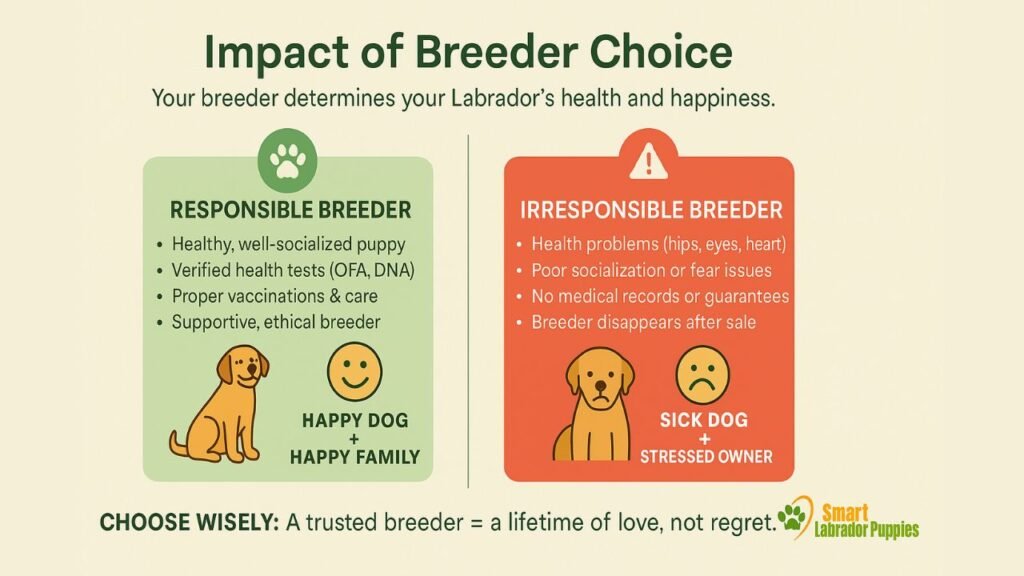
The breeder you select plays a foundational role in the health, temperament, and genetic soundness of your future Labrador. A truly responsible Labrador breeding operation is dedicated to improving the breed, meticulously researching pedigrees, conducting extensive genetic screenings, and providing exceptional care for their breeding dogs and puppies.
This diligent approach stands in stark contrast to breeders focused solely on profit, who often neglect these critical aspects. Poor breeding practices can lead to a myriad of problems, including inherited diseases, significant behavioral issues, and tragically, shorter lifespans. These issues not only cause immense suffering for the dog but also impose substantial emotional and financial strain on unsuspecting owners. Therefore, making the right choice in a breeder is paramount to ensuring you bring home a healthy Labrador pup that will thrive and become a cherished member of your family for years to come.
Understanding Responsible Breeding: More Than Just Puppies
Responsible breeding extends far beyond simply producing puppies; it is a profound commitment to the welfare of the breed. This commitment involves extensive research, rigorous genetic screening, and the careful selection of breeding pairs. A reputable Labrador breeder invests considerable time, effort, and resources into ensuring that each litter contributes positively to the breed’s health and temperament.
This dedication reflects a deep understanding of genetics, canine health, and early puppy development, all aimed at fostering healthy, well-adjusted dogs. Ultimately, it is an ethical endeavor that prioritizes quality over quantity, focusing on the long-term well-being of every dog produced.
What Defines a Reputable Labrador Breeder?
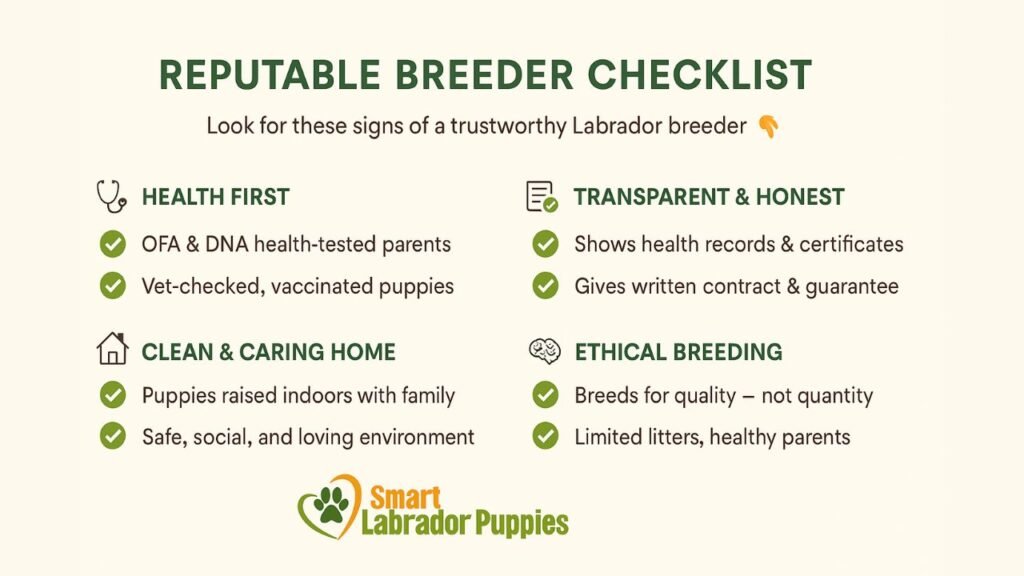
A reputable Labrador breeder is characterized by several key attributes that distinguish them from less scrupulous operations:
- They are typically active members of national or local breed clubs (e.g., The Labrador Retriever Club, Inc.) and adhere to their stringent codes of ethics.
- They often participate in dog sports, conformation shows, or other activities demonstrating their dogs’ adherence to breed standards and working abilities.
- They exhibit utmost transparency about their breeding practices, willingly providing comprehensive health clearances and openly discussing their dogs’ lineage and history.
- Crucially, a good breeder is eager to educate prospective owners, offering invaluable guidance and support.
- They view themselves as lifelong resources, providing ongoing assistance and advice for the duration of the puppy’s life, embodying the true spirit of ethical dog breeding.
The Difference Between a Hobby Breeder and a Puppy Mill
Understanding the stark contrast between a hobby breeder and a puppy mill is fundamental for responsible pet ownership. Here’s a comparison:
| Feature | Hobby Breeder (Reputable) | Puppy Mill |
|---|---|---|
| Motivation | Passion for the breed, improving health & temperament | Mass production, profit-driven |
| Litter Volume | Limited number of litters per year | Multiple litters consistently available |
| Environment | Clean, stimulating home environment; early socialization | Unsanitary, overcrowded conditions; minimal interaction |
| Health Care | Significant investment in health testing, nutrition, vet care | Minimal vet care, neglect of health & socialization |
| Transparency | Openly provides health clearances, invites visits | Evasive, hides conditions, avoids visits |
| Outcome | Healthy, well-adjusted, confident puppies | High incidence of genetic diseases, behavioral issues, poor health |
Non-Negotiable Health Clearances for Labrador Retrievers
Labrador Retrievers, like many purebred dogs, are predisposed to certain genetic conditions. A cornerstone of responsible Labrador breeding practices is the proactive screening of breeding stock for these inherited diseases.
Reputable breeders understand that conducting specific Labrador health tests is not merely a recommendation but a non-negotiable requirement to minimize the risk of passing these conditions to future generations. Organizations like the Orthopedic Foundation for Animals (OFA) and the American College of Veterinary Ophthalmologists (ACVO) provide standardized protocols and certifications that breeders must adhere to, ensuring a transparent and verifiable record of a dog’s health status.
For Labrador Retrievers, specific health tests are not merely a recommendation, but a non-negotiable requirement for responsible breeding.
Hip and Elbow Dysplasia: OFA and PennHIP Certifications
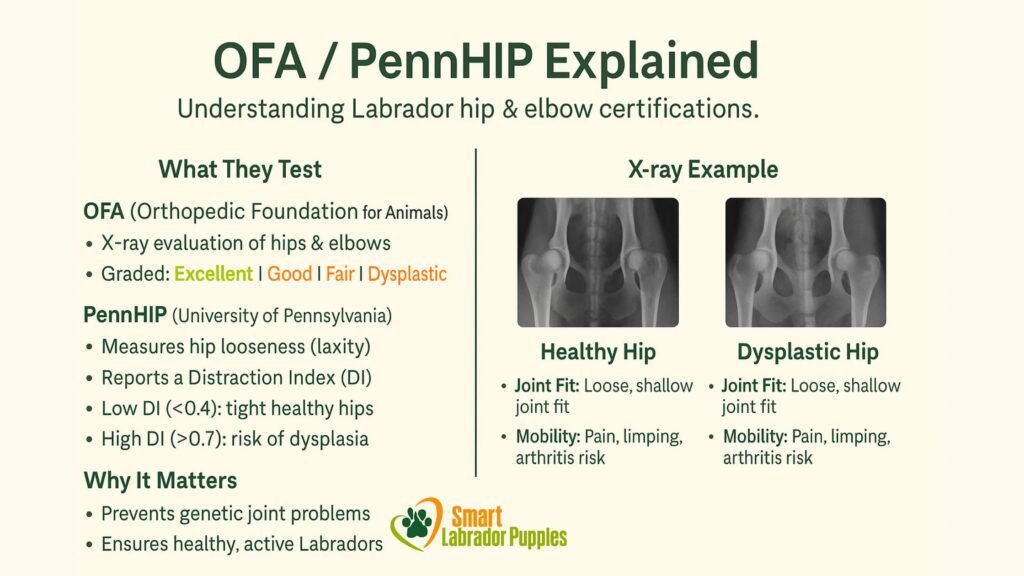
Among the most prevalent and debilitating joint conditions affecting Labradors are hip and elbow dysplasia. These genetic disorders can cause chronic pain, lameness, and significantly impact a dog’s quality of life. The Orthopedic Foundation for Animals (OFA) offers a comprehensive public database where evaluations of hip and elbow joints are registered.
Dogs are certified as “Excellent,” “Good,” or “Fair” for hips and “Normal” for elbows, indicating a low risk of dysplasia. Another highly respected method is PennHIP, which provides a quantitative measurement of hip laxity. PennHIP can often offer an earlier and more predictive assessment of a dog’s susceptibility to hip dysplasia. A reputable breeder will provide clear, verifiable documentation for at least one of these certifications for both parent dogs, demonstrating their commitment to preventing these painful conditions.
Eye Health: CERF/OFA Eye Examinations
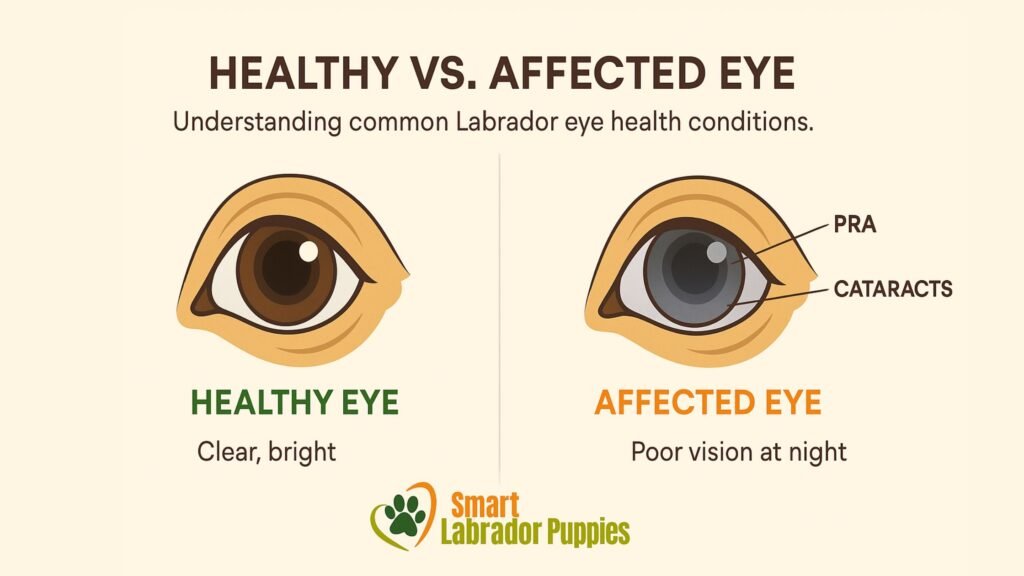
Labradors can also be susceptible to various inherited eye conditions, including Progressive Retinal Atrophy (PRA) and cataracts, which can lead to impaired vision or blindness. To address this, annual eye examinations performed by a board-certified veterinary ophthalmologist (ACVO) are crucial. The results of these examinations are registered with the OFA Eye Certification Registry (formerly known as CERF).
This certification indicates whether the dog is free of observable inherited eye disease at the time of examination. While the certification is valid for one year, a responsible breeder will ensure their breeding dogs undergo these examinations annually to maintain a current and clear eye health status, thereby reducing the risk of passing on conditions like PRA Labrador to their puppies.
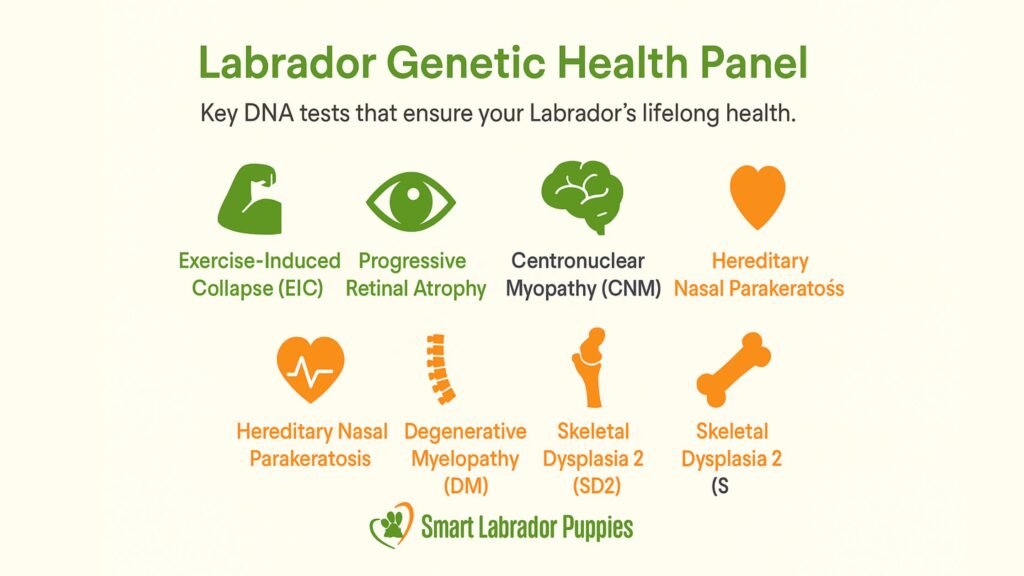
Genetic Testing: EIC, PRA, CNM, HNPK, DM
Beyond structural health, several specific genetic disorders can affect Labradors. Genetic testing of Labrador parents is essential to prevent these conditions from being passed down. Key tests include:
- Exercise-Induced Collapse (EIC): This genetic disorder causes affected dogs to experience weakness, disorientation, and collapse after strenuous exercise. DNA testing identifies carriers and affected dogs, allowing breeders to make informed pairing decisions.
- Progressive Retinal Atrophy (PRA): As mentioned, PRA is a group of genetic diseases leading to the degeneration of the retina and eventual blindness. Specific DNA tests, such as prcd-PRA, are available for Labradors to identify carriers and affected individuals.
- Centronuclear Myopathy (CNM): Also known as hereditary myopathy, CNM Labrador is a muscle disease resulting in muscle weakness and atrophy. A DNA test can accurately identify affected dogs and carriers.
- Hereditary Nasal Parakeratosis (HNPK): This genetic skin disorder primarily affects the nose, causing crusting, cracking, and discomfort. DNA testing is available to screen for this condition.
- Degenerative Myelopathy (DM): A progressive neurological disease affecting the spinal cord, leading to hind limb weakness and eventual paralysis. While less common in Labradors than some other breeds, testing is available, and responsible breeders may include it in their panel.
A reputable breeder will test their breeding stock for these conditions and readily provide clear documentation of the results. They will meticulously ensure that they do not breed two carriers of the same recessive gene together, which could result in affected puppies.
Understanding Pedigrees and Health Guarantees
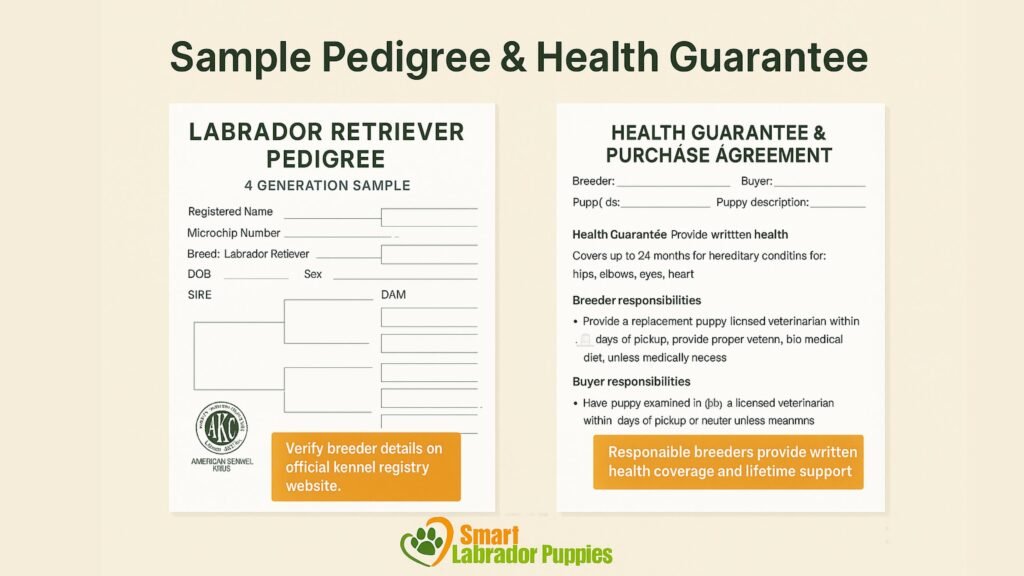
When considering a Labrador puppy, two vital documents provide insight into its background and future health: the pedigree and the health guarantee.
- A pedigree is essentially a family tree for a dog, meticulously tracing its lineage back several generations. It offers valuable information about the genetic background, health history, and conformation of ancestors, allowing you to assess the quality and consistency of the breeding lines.
- A health guarantee, which reputable Labrador breeders provide, is a written agreement outlining the breeder’s responsibility if a puppy develops a serious inherited health issue within a specified timeframe. This guarantee should clearly detail the conditions covered, the duration of coverage, and the breeder’s proposed resolution (e.g., a replacement puppy, partial refund).
Reputable breeders stand firmly behind the health of their puppies and offer clear, fair, and comprehensive guarantees, reflecting their confidence in their breeding program and their commitment to their puppies’ well-being.
Temperament and Socialization: Beyond Physical Health
While physical health clearances are absolutely vital, a Labrador Retriever’s temperament and early socialization are equally critical for it to develop into a well-adjusted, confident, and loving family member. A dog with excellent physical health but a poor temperament can be challenging to live with, highlighting the importance of a holistic approach to selecting a puppy. The early weeks of a puppy’s life, largely influenced by the breeder, lay the crucial groundwork for its future personality and ability to adapt to various situations.
A Labrador Retriever’s temperament and early socialization are equally critical for it to develop into a well-adjusted, confident, and loving family member.
Assessing the Parent Dogs’ Temperament
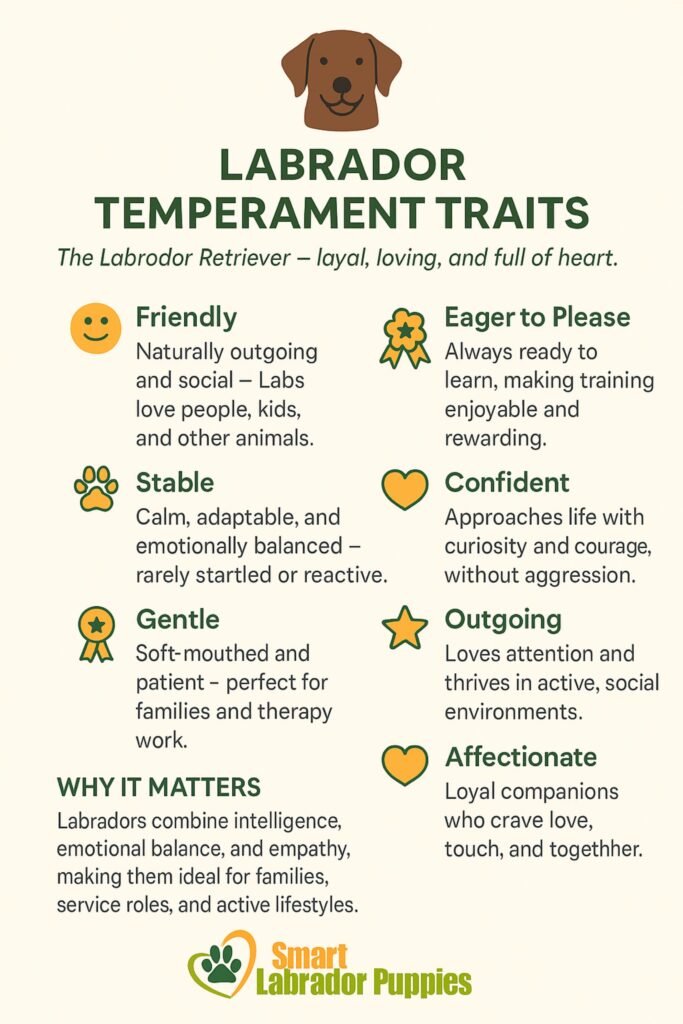
The temperament of the parent dogs (sire and dam) is one of the strongest indicators of the puppies’ potential disposition. Genetics play a significant role in shaping a dog’s personality. Reputable breeders will have parent dogs that exhibit the quintessential Labrador temperament: friendly, stable, confident, and eager to please.
They should be free from excessive shyness, fearfulness, or aggression. When you visit the breeder, observe how the parent dogs interact with the breeder, with you as a visitor, and with any other dogs present. They should be approachable, calm, and exhibit typical Labrador traits of being gentle, outgoing, and affectionate.
A breeder who is proud to introduce you to their parent dogs’ temperament is a good sign, as they have nothing to hide regarding the foundational personalities of their breeding stock.
Early Socialization Practices by the Breeder
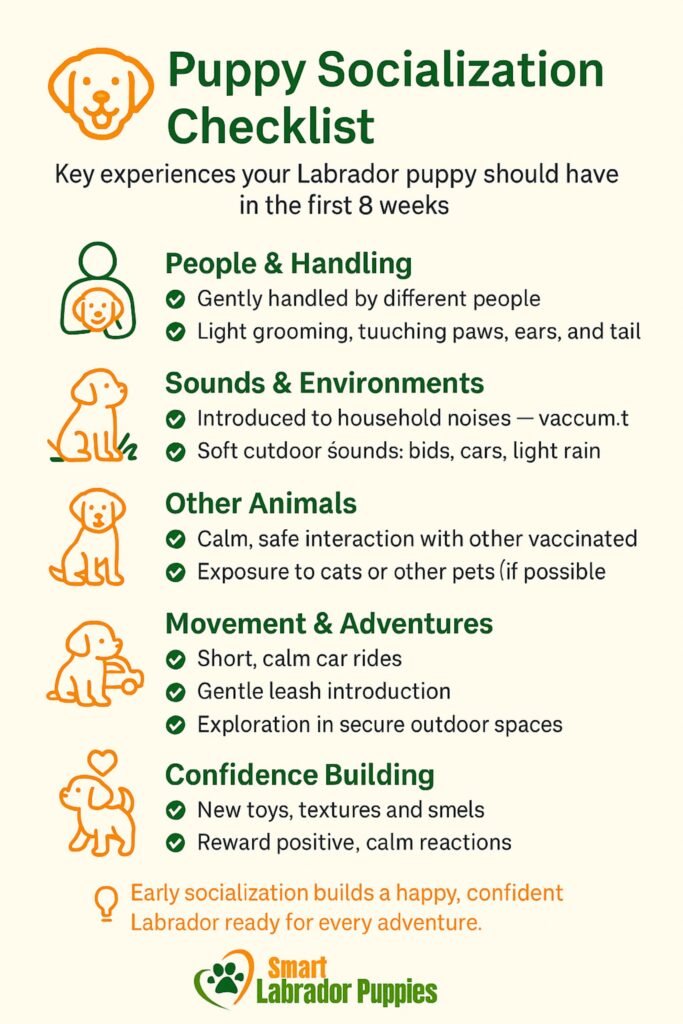
The first 8 weeks of a puppy’s life represent a critical socialization window. During this period, puppies are highly receptive to new experiences, and positive exposure can significantly shape their future behavior. Reputable breeders understand this and implement robust puppy socialization practices. This involves:
- Exposing puppies to a variety of sights, sounds (e.g., household noises like vacuum cleaners, doorbells), and textures.
- Providing gentle handling by different people.
- Introducing appropriate interactions with other dogs.
This early, controlled exposure helps puppies develop confidence, resilience, and adaptability, preparing them to navigate the complexities of new environments and experiences in their future homes. A well-adjusted Labrador puppy is a direct result of these thoughtful early interventions.
The Importance of a Stable Environment for Puppies
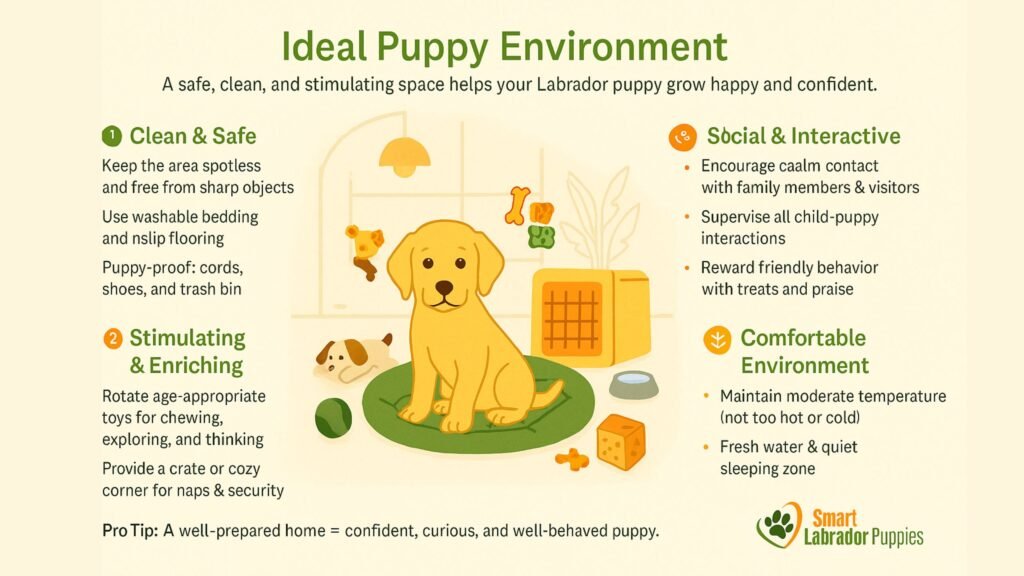
The environment in which puppies are raised profoundly impacts their mental and emotional development. Puppies raised in a clean, stimulating, and loving home environment are far more likely to be well-adjusted, confident, and emotionally secure. They should be accustomed to the normal hustle and bustle of a household, including various noises, different floor surfaces, and consistent human interaction.
A stable, enriching environment reduces stress and fosters positive development, contributing significantly to a puppy’s overall mental and emotional health. Conversely, puppies raised in isolation, in unsanitary conditions, or without adequate stimulation can develop fear, anxiety, or behavioral issues. A breeder who provides a nurturing and stable environment is laying the best possible groundwork for a well-adjusted Labrador puppy.
Visiting the Breeder: What to Observe and Evaluate
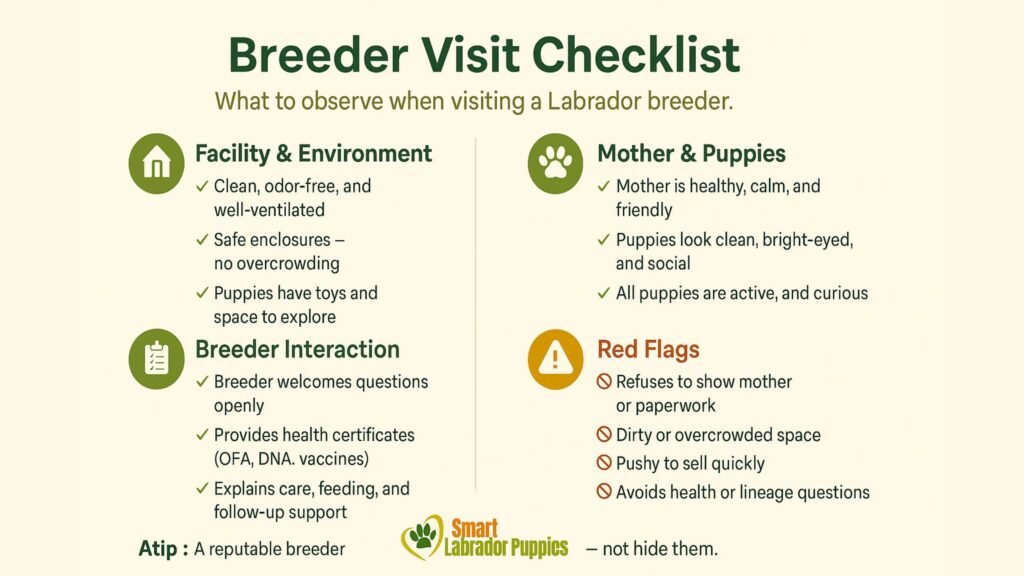
A personal visit to the breeder’s facility is an absolutely essential step in your search for a healthy Labrador puppy. This visit provides an invaluable opportunity to verify the breeder’s practices firsthand and to assess the living conditions of their dogs. Do not skip this step; it offers insights that no phone call or website can truly provide. It allows you to observe the environment, the dogs, and the breeder’s interaction with them, giving you a comprehensive picture of their operation.
A personal visit to the breeder’s facility is an absolutely essential step. It offers insights that no phone call or website can truly provide.
Cleanliness and Condition of the Facilities
When you visit a Labrador breeder, the first thing to evaluate is the cleanliness and overall condition of the facilities. Look for:
- Impeccably clean, well-maintained facilities, free from strong, offensive odors.
- Access to fresh, clean water at all times for puppies and adult dogs.
- Appropriate and clean bedding.
- Adequate space for dogs to move, play, and rest.
Overcrowding, unsanitary conditions, or visible signs of neglect (e.g., excessive waste, dirty bowls, matted fur) are major red flags. A responsible breeder takes pride in their clean kennels and ensures a healthy puppy environment.
Interaction Between Breeder and Dogs/Puppies
Observe closely how the breeder interacts with their adult dogs and the puppies:
- The breeder should exhibit genuine affection, knowledge, and care.
- Dogs should respond positively to the breeder, showing comfort, trust, and enthusiasm.
- The breeder should be passionate and enthusiastic, willing to share information and stories.
- They should answer all your questions openly and patiently.
Any signs of the breeder being dismissive, impatient, or having dogs that appear fearful or withdrawn around them should raise serious concerns.
Observing the Mother Dog and Litter
During your visit, pay particular attention to the mother dog (dam) and the litter:
- The mother dog should appear healthy, well-fed, and have a good temperament.
- She should be attentive to her puppies but also comfortable and relaxed with visitors.
- Puppies should be active, curious, and playful.
- Look for clear eyes, clean coats, and no signs of illness (e.g., runny noses, lethargy, coughing, distended bellies).
- Puppies should be well-socialized, not overly shy or aggressive, and comfortable with gentle handling.
These observations are crucial for assessing the overall health and early socialization of the litter.
Essential Questions to Ask a Prospective Breeder
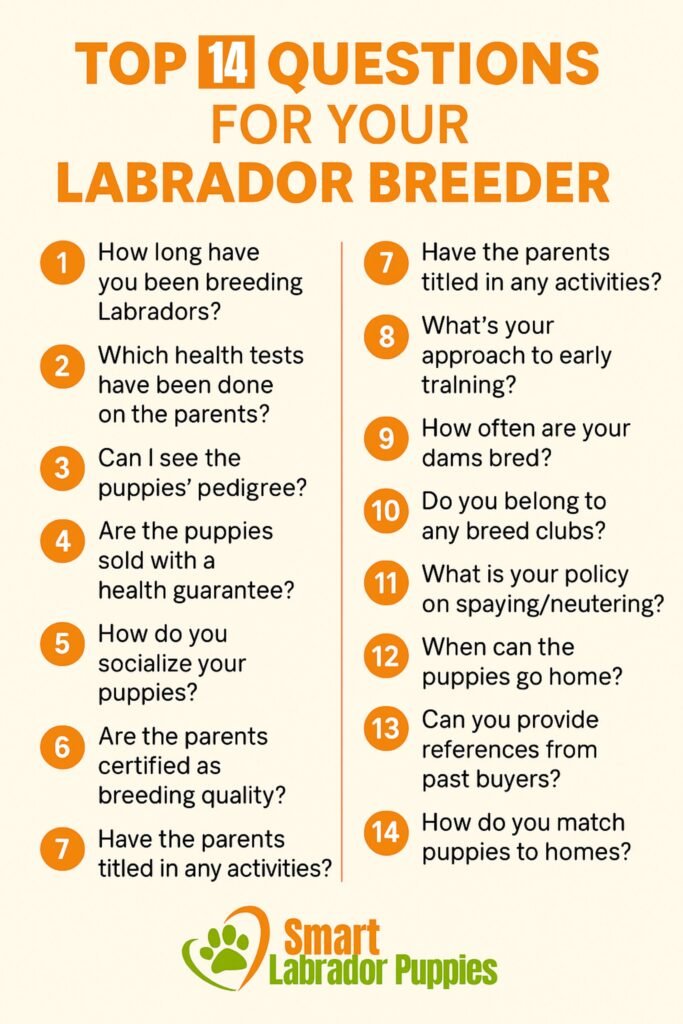
Engaging in a thorough interview with a prospective breeder is crucial. Asking the right questions for a Labrador breeder demonstrates your seriousness as a potential owner and helps you gather critical information to make an informed decision. Do not hesitate to ask detailed questions; a reputable breeder will welcome them.
About Health Clearances and Genetic Testing Results
- “Can I see the OFA/PennHIP certifications for both parents, specifically for hips and elbows?”
- “Do you have current OFA Eye Certification Registry (or ACVO exam) results for the parents? When was their last examination?”
- “What genetic tests (e.g., EIC Labrador, PRA Labrador, CNM Labrador, HNPK, DM) have been performed on the parents, and can I see the official results?”
- “Are the results of these health clearances and genetic tests publicly verifiable, for example, on the OFA’s website or through a specific lab’s database?”
Regarding the Parents’ Temperament and History
- “What are the temperaments of the sire and dam like? Can you describe their personalities?”
- “Can I meet both parents of the litter, or at least the mother (dam)?”
- “What activities or titles do the parents have (e.g., conformation championships, obedience titles, hunt test passes, therapy dog certifications)?”
- “How old are the parents, and how many litters has the mother had? What is the frequency of her litters?”
On Puppy Rearing, Socialization, and Weaning
- “How are the puppies raised and socialized during their first 8 weeks? What specific activities do you engage in?”
- “What kind of environment are they exposed to (e.g., household noises, different surfaces, interaction with children or other pets)?”
- “What brand and type of food are the puppies currently eating, and what is their feeding schedule?”
- “At what age do you typically send puppies to their new homes? (Reputable breeders will not release puppies before 8 weeks of age).”
Understanding the Sales Contract and Health Guarantee
- “Can I review your sales contract and health guarantee before I commit to a puppy?”
- “What specific health conditions are covered by the guarantee, and for how long is it valid?”
- “What are the terms and conditions if a puppy develops a covered health issue? (e.g., replacement puppy, partial refund, veterinary cost contribution).”
- “Are there any clauses regarding spaying/neutering or breeding restrictions in the puppy contract?”
Post-Sale Support and Return Policies
- “What kind of ongoing breeder support do you offer new puppy owners? Are you available for questions and advice throughout the dog’s life?”
- “Do you require or encourage owners to return the dog to you if, for any reason, they can no longer care for it at any point in its life?”
- “What is your policy regarding returning a puppy if it doesn’t work out within a certain timeframe?”
Red Flags to Watch Out For: Avoiding Pitfalls
While the search for a Labrador puppy is exciting, it’s crucial to be vigilant for red flags a Labrador breeder operation might display. Being aware of these warning signs can help you avoid unethical breeders, potential heartbreak, and significant financial burdens associated with unhealthy or poorly socialized dogs. Protecting yourself and contributing to responsible pet ownership means recognizing and steering clear of these pitfalls.
Lack of Transparency or Evasiveness
A breeder who is unwilling to answer your questions thoroughly, show verifiable health clearances for the parent dogs, or allow you to visit their facility is a major bad breeder sign. Evasiveness about the parents’ history, the living conditions of their dogs, or the specific care provided to the puppies indicates that something is being hidden. A reputable breeder will be open, honest, and proud to share every aspect of their breeding program. Any resistance or discomfort when asked for documentation or a visit should be a significant warning.
Multiple Breeds or Too Many Litters
Be wary of breeders who offer many different breeds of puppies or who consistently have multiple litters available simultaneously. This often indicates a commercial operation focused on profit rather than the welfare and improvement of a specific breed. Unethical breeding operations prioritize volume over quality, often leading to compromised health and socialization. Reputable breeders typically specialize in one or two breeds at most and have a limited number of litters per year, allowing them to dedicate proper care and attention to each dog and puppy.
No Health Clearances or Poor Living Conditions
This is perhaps the most critical red flag. Any breeder who cannot provide verifiable health clearances (OFA, PennHIP, ACVO eye exams, genetic test results) for the parent dogs should be immediately dismissed. These clearances are non-negotiable for Labradors due to their predisposition to certain genetic conditions. Furthermore, unsanitary, crowded, or neglectful living conditions for the dogs and puppies are clear signs of a puppy mill or an irresponsible operation. These environments foster disease, stress, and poor socialization, leading to unhealthy and often behaviorally challenged puppies. Do not compromise on these fundamental requirements.
Any breeder who cannot provide verifiable health clearances for the parent dogs or maintains unsanitary living conditions should be immediately dismissed. These are non-negotiable requirements.
Pressure to Buy Immediately or Meet in Public Places
High-pressure sales tactics, such as demanding immediate payment, claiming a puppy is “the last one left,” or refusing to allow you to see where the puppies are raised (e.g., insisting on meeting in a parking lot or other public place), are serious red flags a Labrador breeder operation often exhibits. A reputable breeder’s priority is to ensure their puppies go to good, loving homes, not to make a quick sale. They will take the time to screen prospective owners and will never pressure you into a decision. Be particularly cautious of online puppy sales that lack transparency or insist on unusual meeting arrangements, as these can often be puppy scams to avoid.
The Puppy’s First Weeks: What to Expect and Prepare For
Bringing a puppy home is an incredibly exciting time, but it requires careful preparation to ensure a smooth and positive transition for your new Labrador companion. The first few weeks in your home are crucial for establishing routines, continuing socialization, and ensuring your puppy’s ongoing health and well-being. Being prepared will make the experience less stressful for both you and your new family member.
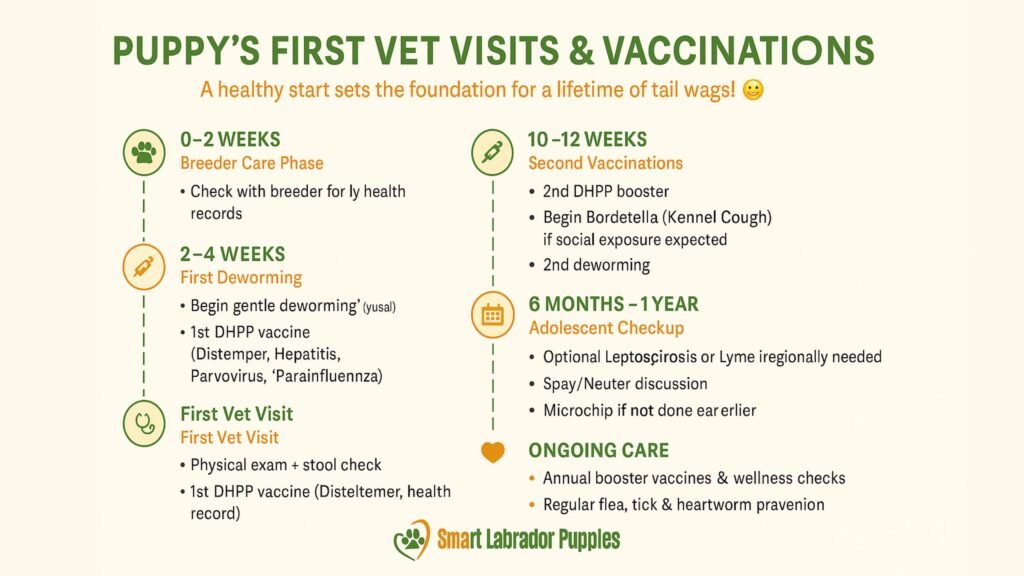
Vaccination Schedule and Worming
Your new Labrador puppy will have already received some initial veterinary care from the breeder. Key points regarding their early health care:
- Puppies typically receive their first round of core vaccinations (distemper, parvovirus, adenovirus, parainfluenza) at 6-8 weeks of age.
- Booster shots follow every 3-4 weeks until they are approximately 16 weeks old.
- They should also have been dewormed multiple times by the breeder, as puppies are highly susceptible to intestinal parasites.
- It is essential to obtain a complete record of all veterinary care, including vaccination dates and deworming history, from your breeder.
- Share this information with your own veterinarian at your puppy’s first check-up to ensure their puppy vaccination schedule is continued appropriately.
Microchipping and Initial Vet Checks
Important steps for your puppy’s initial integration and health:
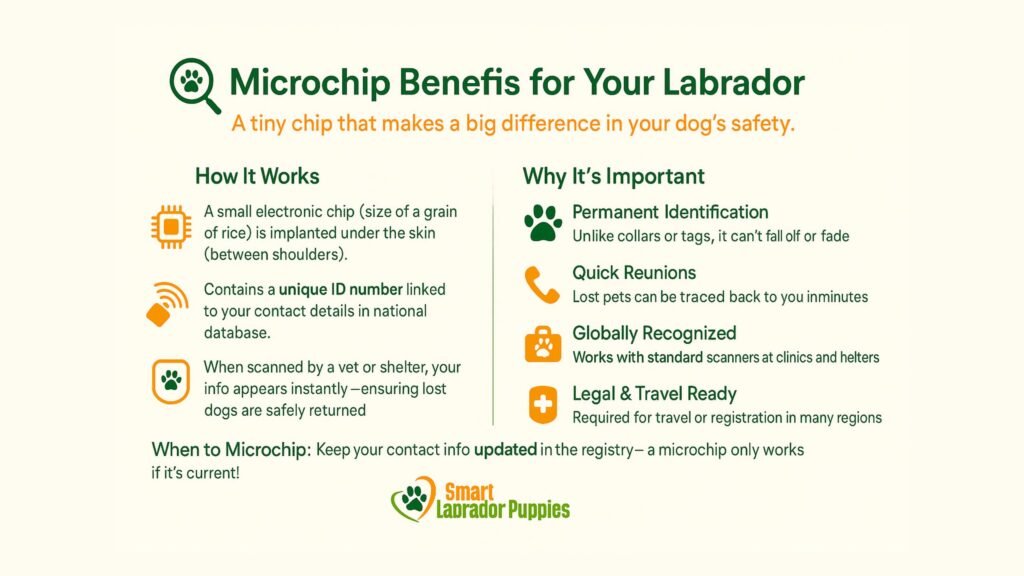
- Many reputable breeders will microchip puppies before they go to their new homes. Ensure the microchip is registered in your name as soon as possible.
- Within the first few days of bringing your puppy home, schedule an initial veterinary check-up with your own trusted veterinarian.
- This visit allows your vet to confirm your puppy’s overall health, establish a baseline for future care, and discuss any immediate concerns.
- It’s also an excellent opportunity to ask questions about diet, parasite prevention, and future vaccination needs, ensuring comprehensive Labrador puppy care.
Preparing Your Home for Your New Labrador Puppy
Preparing for a puppy involves more than just buying cute toys. Here’s what you need to do:
- Puppy-Proof Your Home: Remove potential hazards such as toxic plants, household chemicals, small objects that could be swallowed, and accessible electrical cords.
- Gather Essential Supplies: Acquire an appropriately sized crate, food and water bowls, high-quality puppy food, a collar and leash, a variety of safe chew toys, and basic grooming tools.
- Establish a Consistent Routine: Set a regular schedule for feeding, potty breaks, training sessions, and sleep from day one. This structure helps your puppy adjust quickly.
- Continue Early Socialization: Introduce them to new sights, sounds, and gentle interactions in a controlled manner to help them grow into a confident, well-adjusted adult Labrador.
Conclusion: Making an Informed Decision for a Lifetime of Joy
The journey to finding a healthy Labrador pup and a truly responsible breeder is an investment of time, effort, and careful consideration. However, the rewards of this diligence are immeasurable. By making an informed decision, you are not only ensuring a healthy start for your new companion but also contributing to the ethical practices that uphold the integrity and well-being of the Labrador Retriever breed. Your commitment to thorough research and responsible selection will pave the way for a lifetime of joy and companionship with your beloved dog.
Recap of Key Considerations
To ensure you are finding a good Labrador breeder and ultimately bringing home the best Labrador puppy for your family, keep these key considerations at the forefront of your decision-making process:
- Health Clearances: Prioritize breeders who conduct comprehensive health clearances for their breeding stock, including OFA/PennHIP for hips and elbows, annual ACVO eye examinations, and genetic tests for conditions like EIC, PRA, CNM, HNPK, and DM. Always request and verify documentation.
- Temperament and Socialization: Evaluate the temperament of both parent dogs and inquire extensively about the breeder’s early socialization practices. A well-adjusted puppy comes from well-tempered parents and a stimulating early environment.
- Facility Visit: Insist on visiting the breeder’s facility to observe the cleanliness, the welfare of the dogs, and the interaction between the breeder and their animals.
- Thorough Questions: Ask a comprehensive list of questions covering health, temperament, puppy rearing, and post-sale support. A reputable breeder will welcome your inquiries.
- Contract and Guarantee: Carefully review the sales contract and health guarantee, understanding all terms and conditions before committing.
- Red Flag Awareness: Be vigilant for any red flags, such as lack of transparency, multiple breeds, poor conditions, or high-pressure sales tactics.
The Reward of a Well-Chosen Labrador
Choosing a Labrador from a truly reputable Labrador breeder significantly increases the likelihood that you will welcome a healthy, well-adjusted, and long-lived companion into your home. This diligent approach helps prevent costly health issues and behavioral challenges down the line, allowing you to focus on building a loving bond. Your commitment to being a responsible dog owner not only benefits your individual pet but also supports ethical breeding practices and the overall health of the Labrador Retriever breed. The years of unwavering loyalty, boundless affection, and joyful moments that a well-chosen Labrador brings are truly the ultimate reward for your informed decision, ensuring long-term Labrador health and happiness for everyone involved.
Frequently Asked Questions – How to Choose a Labrador Breeder
Why is choosing the right Labrador breeder important?
The breeder you select plays a foundational role in the health, temperament, and genetic soundness of your future Labrador. Responsible breeders meticulously research pedigrees, conduct extensive genetic screenings, and provide exceptional care, which helps prevent inherited diseases, behavioral issues, and shorter lifespans often associated with poor breeding practices.
What defines a reputable Labrador breeder?
A reputable Labrador breeder is typically an active member of breed clubs, participates in dog sports, and is transparent about their breeding practices. They willingly provide comprehensive health clearances, educate prospective owners, and offer lifelong support, prioritizing the welfare of the breed over profit.
What health clearances are non-negotiable for Labrador breeders?
For Labrador Retrievers, non-negotiable health tests include OFA/PennHIP certifications for hip and elbow dysplasia, annual OFA Eye Certification Registry (ACVO) examinations, and genetic testing for conditions such as Exercise-Induced Collapse (EIC), Progressive Retinal Atrophy (PRA), Centronuclear Myopathy (CNM), Hereditary Nasal Parakeratosis (HNPK), and Degenerative Myelopathy (DM).
Why is visiting the breeder’s facility important?
A personal visit to the breeder’s facility is essential to verify their practices firsthand. It allows you to assess the cleanliness and condition of the facilities, observe the temperament of the parent dogs and puppies, and evaluate the breeder’s interaction with their animals, providing invaluable insights into their operation.
What are some red flags to watch out for when choosing a Labrador breeder?
Key red flags include a lack of transparency or evasiveness about health clearances or facilities, offering many different breeds or consistently having multiple litters, absence of verifiable health clearances, unsanitary or overcrowded living conditions, and high-pressure sales tactics or insisting on meeting in public places.