
Bringing a new puppy into your home is an exciting prospect, and for countless individuals and families, the Labrador Retriever stands out as the breed of choice. Renowned for their friendly disposition, keen intelligence, and unwavering loyalty, it’s no wonder Labradors consistently rank among the most popular dog breeds worldwide. However, before welcoming one of these delightful companions into your life, it’s crucial to understand the various factors that influence Labrador puppy prices. The initial cost of a Labrador puppy can vary significantly, and this comprehensive guide aims to demystify those variations, empowering you to make an informed decision.
Why Labrador Retrievers are Popular
The enduring popularity of Labrador Retrievers is not merely a trend; it is a testament to their exceptional qualities. Their gentle nature makes them superb family pets, excelling in households with children and other animals. Beyond their role as cherished companions, their intelligence and eagerness to please make them highly trainable for diverse roles, ranging from service and therapy animals to skilled hunting partners and competitive athletes. This remarkable versatility, combined with their generally robust health and joyful demeanor, explains why Labradors are popular choices for a wide range of households and lifestyles.

The Importance of Responsible Breeding
While the allure of a Labrador is undeniable, the foundation of a healthy, well-adjusted dog begins with responsible Labrador breeding. Ethical breeders meticulously prioritize the health, temperament, and genetic integrity of their breeding lines. They invest considerable time and resources into comprehensive health screenings for common breed-specific conditions, such as hip and elbow dysplasia, ensuring their puppies have the best possible start in life. This unwavering commitment to responsible practices not only upholds the breed standard but also significantly reduces the likelihood of future health or behavioral issues, which can be both costly and heartbreaking for new owners. Understanding this commitment is therefore key to appreciating the variations in puppy pricing.
Responsible breeding is the cornerstone of a healthy, happy Labrador. Ethical breeders prioritize health screenings, temperament, and genetic integrity, significantly reducing future health and behavioral risks for your puppy.
Factors Influencing Labrador Puppy Prices
The price tag associated with a Labrador puppy is far from arbitrary; it is a direct reflection of numerous factors that collectively contribute to the puppy’s health, temperament, and overall quality. Understanding these crucial elements is essential for prospective owners to accurately gauge what they are truly paying for.
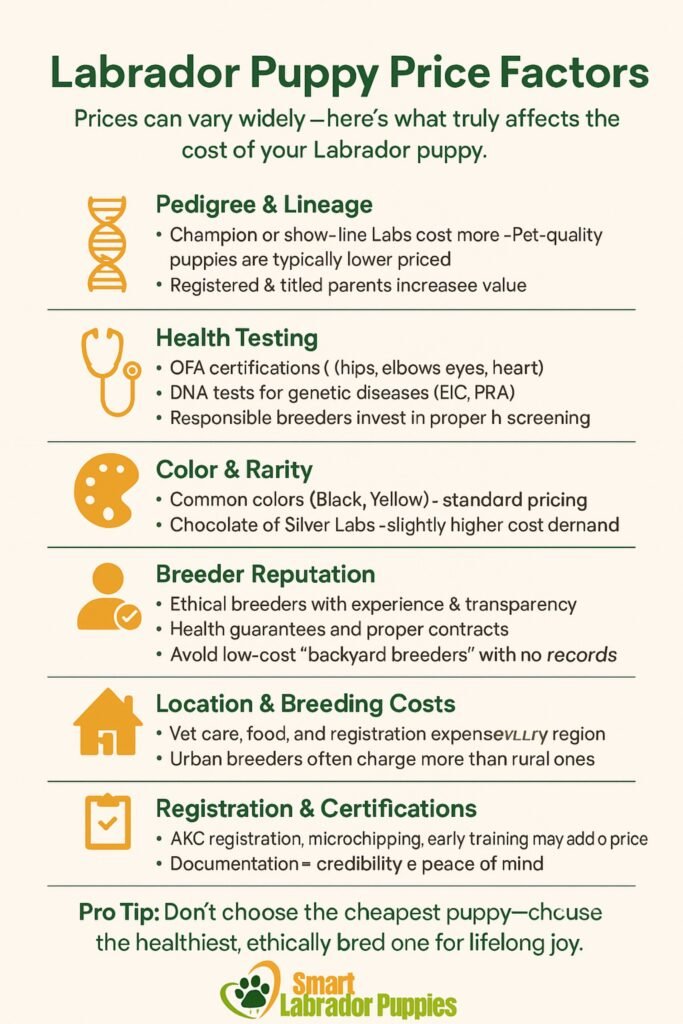
Breeder Reputation and Experience
- Reputable breeders invest heavily in their program: health testing, superior nutrition, comprehensive vet care, and early socialization.
- Many participate in dog shows or performance events, demonstrating quality.
- Ongoing support and guidance from an an experienced breeder add significant, intangible value, often justifying a higher initial investment compared to less established or ‘backyard’ operations.
Pedigree and Bloodlines (Show vs. Pet Quality)
- Show Quality/Breeding Quality: Puppies from champion bloodlines (parents/grandparents with titles) command higher prices ($2,500 – $5,000+). They adhere strongly to breed standards and have potential for competitive success.
- Pet Quality: Equally healthy and well-tempered, but may have minor cosmetic traits. Generally sold at a lower price ($800 – $2,000), often with limited AKC registration (preventing breeding/showing).
Health Clearances and Genetic Testing
For any responsible breeder, comprehensive Labrador health clearances and genetic testing are non-negotiable requirements. These extensive and often expensive tests screen for hereditary conditions prevalent in the breed:
- Hip and Elbow Dysplasia: OFA (Orthopedic Foundation for Animals) certifications.
- Eye Conditions: OFA Eye Certification.
- Genetic Disorders:
- Exercise-Induced Collapse (EIC)
- Centronuclear Myopathy (CNM)
- Progressive Retinal Atrophy (PRA)
The cost of these crucial preventative measures is inherently built into the puppy’s price, offering buyers invaluable peace of mind and significantly reducing the risk of substantial veterinary bills for preventable conditions later in the dog’s life.

Location and Regional Demand
Geographical location and the local demand for purebred dogs can cause notable variations in Labrador puppy cost by location.
- Areas with a higher cost of living (e.g., major metropolitan centers, certain states) often see higher prices.
- Puppies might be slightly more affordable in more rural regions.
- Shipping costs for long-distance transport can further inflate the overall expense.
Coat Color (Yellow, Black, Chocolate, Silver?)
The American Kennel Club (AKC) officially recognizes three standard Labrador Retriever coat colors: Yellow, Black, and Chocolate.
- Generally, the Labrador coat color price for these traditional hues is quite similar, though regional demand can cause minor fluctuations.
- The controversial “Silver” Labrador (considered a dilute chocolate by the AKC) often carries a higher price due to perceived rarity.
- Caution: Exercise extreme caution with breeders marketing “rare” colors at inflated prices, as this can sometimes indicate less ethical breeding practices or potential underlying health concerns. A black Labrador price, yellow Labrador price, or chocolate Labrador price from a truly reputable breeder should not vary drastically based solely on coat color.
Included Services (Vaccinations, Microchipping, Deworming)
Reputable breeders typically ensure the puppy receives essential early health services, which are included in the price:
- First set of core vaccinations (e.g., distemper, parvovirus).
- Regular deworming schedule.
- Thorough veterinary health check-up.
- Many also include microchipping services, providing vital permanent identification.
These essential services, often advertised as “Labrador puppy vaccinations included,” contribute significantly to the overall price and offer substantial value and reassurance to the buyer.
Early Training and Socialization Efforts
Some exceptional breeders invest further by initiating early training and socialization efforts, which can justifiably influence the puppy’s price. This might involve:
- Starting basic crate training.
- Introducing early potty training concepts.
- Carefully exposing puppies to a variety of sights, sounds, people, and other animals in a controlled manner.
Such comprehensive early socialization is paramount for developing a confident, resilient, and well-adjusted adult dog. These efforts require substantial time, expertise, and resources from the breeder, making them a valuable addition to the puppy’s foundational development and a significant factor in the overall cost. This reflects the breeder’s dedication to producing well-rounded companions ready for their new homes and can significantly ease future Labrador puppy training for the new owner.
Average Labrador Puppy Price Ranges
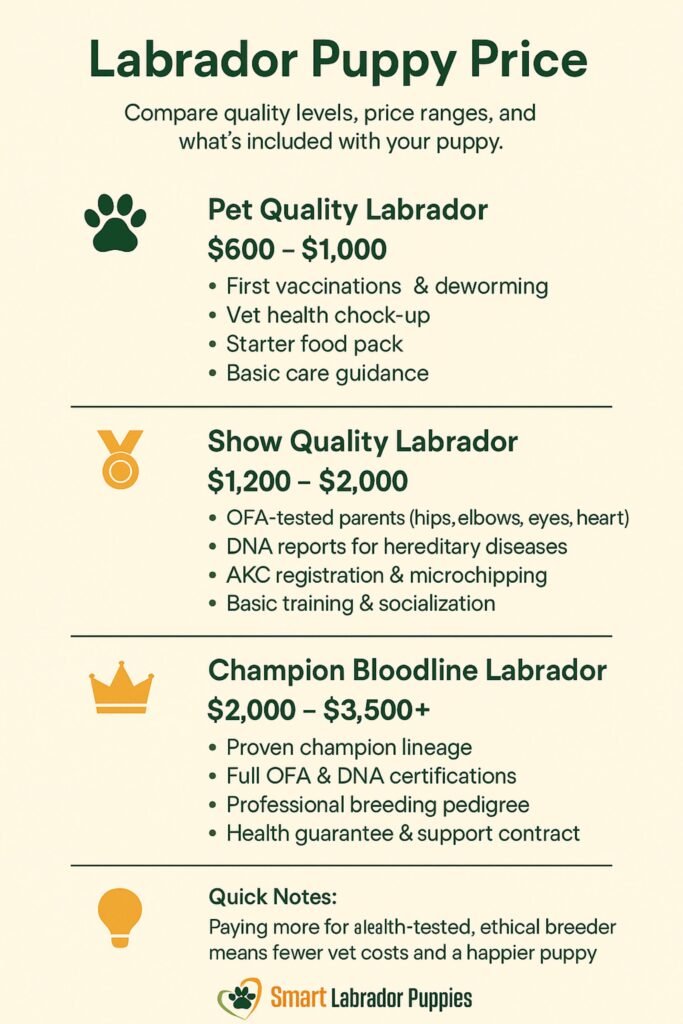
Understanding the factors that influence pricing helps set realistic expectations, but what are the actual numbers prospective owners can anticipate? The average Labrador price can fluctuate widely, but general ranges provide a solid starting point for budgeting.
Typical Price Brackets for Pet-Quality Labs
For a healthy, well-socialized pet-quality Labrador from a reputable breeder, you can generally expect to pay:
- Price Range: $800 to $2,000
- Includes: Initial veterinary care, a health guarantee, and AKC limited registration.
- Lower End: Found in less densely populated areas or from newer, but still ethical, breeders.
- Higher End: Reflects extensive health testing of parents, strong pedigrees, and comprehensive early care and socialization efforts.
Price Differences for Show or Breeding Quality
Labrador puppies specifically designated as “show quality” or possessing significant “breeding quality” potential will command a considerably higher investment.
- Price Range: $2,500 to $5,000, or even higher.
- Premium Reflects: Exceptional bloodlines (often featuring multiple champions), superior conformation to the breed standard, and full AKC registration (permitting breeding and participation in conformation events).
- Accounts For: Breeder’s substantial investment in top-tier breeding stock, extensive showing expenses, and the puppy’s potential to contribute positively to the breed’s future.
Geographical Price Variations Across States/Countries
As previously noted, geographical location significantly impacts regional Labrador prices. The Labrador puppy price by state can vary dramatically.
| Region/Factor | Typical Price Impact | Example Locations |
|---|---|---|
| High Cost of Living / High Demand | Higher End of Price Range | California, New York, Massachusetts |
| Rural Regions / Lower Cost of Living | Slightly Lower Average Prices | Midwest, Southern regions |
| International Purchases | Fluctuates significantly based on local economies and regulations. | Varies widely |
When considering international purchases, prices can fluctuate even more, influenced by local economies, breeding regulations, and the availability of reputable breeders in that specific country.
What Should Be Included in the Price?
When investing in a Labrador puppy, the purchase price should encompass far more than just the puppy itself. A reputable breeder will provide a comprehensive package that ensures the puppy’s health, proper documentation, and ongoing support. Here’s what you should expect to be included:
- Health Guarantees and Contracts:
- A written Labrador puppy health guarantee (typically 1-2 years for genetic issues).
- A detailed Labrador puppy contract outlining terms of sale, buyer responsibilities, and often a spay/neuter clause for pet-quality puppies.
- Initial Veterinary Care (Vaccinations, Deworming):
- Proof of first set of core vaccinations (often referred to as “Labrador puppy shots,” covering diseases like distemper and parvovirus).
- Adherence to a consistent deworming schedule.
- A health certificate from a licensed veterinarian.
- AKC or Other Registration Papers:
- AKC Labrador registration papers (limited for pet-quality, full for show/breeding).
- Breeder should provide paperwork or clear instructions for registration.
- Microchipping:
- Many reputable breeders microchip puppies before they leave.
- You should receive the microchip number and instructions to register it in your name.
- Puppy Starter Kit and Food:
- Small bag of the puppy’s current food for dietary transition.
- Blanket or toy with the scent of the littermates and mother helps comfort the puppy as it adjusts to its new environment.
- Detailed care instructions (feeding, training tips, vet appointments).
- Ongoing Breeder Support and Resources:
- Availability to answer questions about training, health, or behavior.
- Often a contract clause stating they will take the dog back at any point if the owner’s circumstances change.
Red Flags When Buying a Labrador Puppy
While the excitement of bringing home a new puppy can be overwhelming, it’s absolutely crucial to remain vigilant and recognize warning signs that indicate an irresponsible or unethical breeder. Avoiding these red flags can save you significant heartache and financial strain in the long run.
- Unusually Low Prices: A Warning Sign
- “Cheap Labrador puppies” often come from backyard breeders or, worse, puppy mills.
- They typically forgo expensive health testing, provide inadequate nutrition, neglect proper veterinary care, and skip crucial early socialization.
- Puppies from such sources are at a much higher risk of developing serious, expensive health issues or behavioral problems, ultimately costing far more in veterinary bills and emotional distress than any initial savings.
- Lack of Health Documentation or Parent Information
- A breeder’s inability or unwillingness to provide comprehensive health documentation for the parent dogs is a major warning sign. This includes certifications for hips and elbows (OFA), eye clearances (OFA Eye Certification), and genetic test results for conditions like EIC, PRA, and CNM.
- If a breeder prevents you from meeting one or both parent dogs, or is evasive about their health history or temperament, it strongly suggests they may be hiding something. A reputable breeder will be transparent and proud to share information about their breeding stock, so a “no health papers Labrador” situation should raise immediate and serious concerns.
- No Breeder-Buyer Contract
- The absence of a formal breeder-buyer contract is a serious red flag. A well-drafted contract serves to protect both the buyer and the breeder, clearly outlining health guarantees, return policies, spay/neuter agreements, and other important terms and conditions of the sale.
- Without such a contract, you have very little recourse or protection if issues arise with the puppy’s health or temperament after the purchase, leaving you vulnerable to potential problems with unethical Labrador breeders.
- Pressure to Make a Quick Decision
- Be extremely wary of breeders who employ high-pressure puppy sales tactics. This includes demanding immediate payment, refusing to allow multiple visits to see the puppies and their living environment, or pushing you to make a decision on the spot.
- Such tactics often indicate a breeder who is more interested in making a quick sale than ensuring a good, lifelong match between puppy and owner. It can also be a sign that they have something to hide about their operation or the puppies’ welfare, which are classic puppy mill red flags.
- Poor Living Conditions for Puppies/Parents
- When you visit the breeder, pay extremely close attention to the living conditions. Red flags include an unclean environment, overcrowded kennels, or puppies and parent dogs that appear unhealthy, underweight, fearful, or unsocialized.
- Puppies should be clean, active, curious, and playful, and the adult dogs should appear well-cared for with good temperaments. Poor conditions are a strong indicator of a puppy mill or irresponsible breeding practices, where the welfare of the animals is clearly secondary to profit.
Is a More Expensive Labrador Puppy Always Better?
It’s natural to seek the best deal, but when it comes to a living creature, the lowest price rarely equates to the best long-term value. Understanding the critical distinction between initial cost and long-term value is crucial for prospective Labrador owners.
Understanding Value vs. Cost
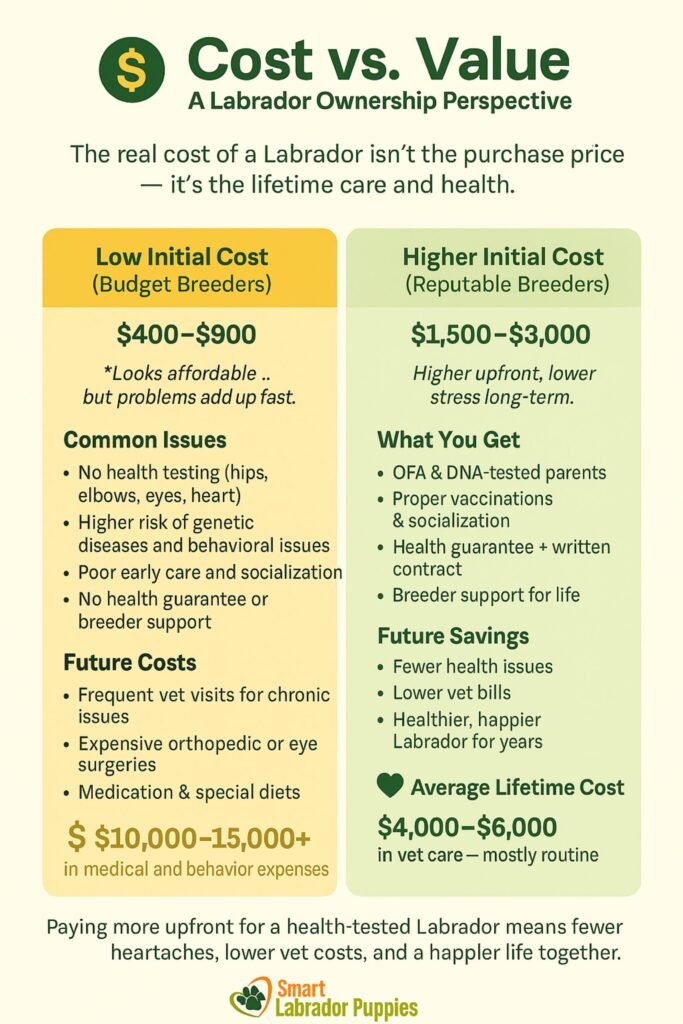
While a higher initial price tag doesn’t automatically guarantee a superior puppy, it very often reflects the significant, responsible investment a truly reputable breeder makes in their dogs. This investment covers extensive health testing, premium nutrition, comprehensive veterinary care, crucial early socialization, and ongoing support. The true “value of a well-bred Labrador” lies not just in the puppy itself, but in the reduced risk of future health problems, a more predictable and stable temperament, and a solid foundation for a long, healthy, and happy life. This upfront investment can ultimately save owners considerable money and heartache in the long run by avoiding costly veterinary bills and behavioral interventions.
The Long-Term Benefits of a Well-Bred Puppy
Investing in a well-bred Labrador puppy from a reputable source offers numerous profound long-term benefits:
- Significantly less likely to suffer from debilitating and expensive genetic health conditions, leading to fewer veterinary bills over their lifetime.
- They typically possess more stable and predictable temperaments, making them easier to train and integrate seamlessly into a family environment.
- A healthy, well-socialized Labrador is more likely to be a joyful, well-adjusted companion for many years, minimizing behavioral issues and maximizing the positive experience of dog ownership.
This foresight into the “long-term cost of Labrador” ownership highlights the immense “benefits of reputable breeder” practices.
Alternatives to Buying: Labrador Adoption and Rescue
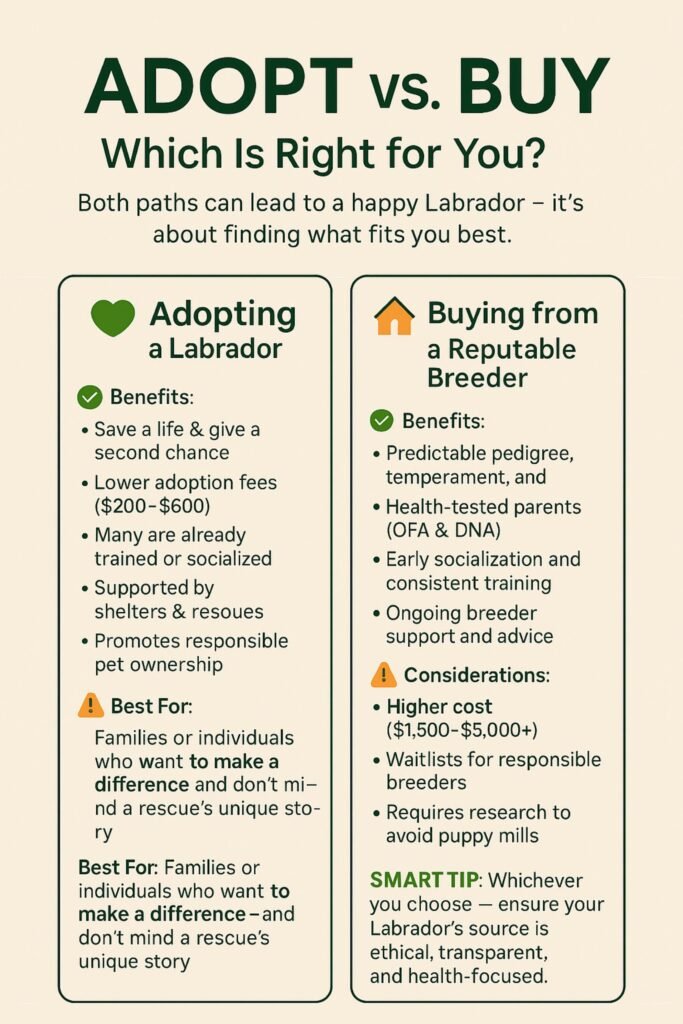
While purchasing a puppy from a reputable breeder is a wonderful path to dog ownership, it is certainly not the only one available. For many, adopting a Labrador from a rescue organization or shelter offers a deeply rewarding experience and a vital second chance for a deserving dog.
The Benefits of Adopting a Lab
Adopting a Labrador comes with a multitude of benefits:
- You provide a loving home to a dog in need, often directly saving a life.
- Many rescue Labs arrive at their new homes already spayed or neutered, up-to-date on vaccinations, microchipped, and sometimes even house-trained or possessing basic obedience skills.
- The “cost of adopting a Labrador” is significantly lower than purchasing a puppy, typically ranging from $200-$500, and these fees often cover initial veterinary costs.
- Furthermore, adopting an adult dog means you often bypass the challenging puppy phase, and reputable rescue organizations typically have a good understanding of the dog’s temperament and history, helping you find a perfect match.
These “benefits of adopting a dog” extend to both the owner and the animal.
Where to Find Reputable Labrador Rescues
Finding reputable Labrador rescue organizations is relatively straightforward:
- Breed-specific rescue groups: Such as “Labrador Retriever Rescue of [Your State/Region],” often specializing in the breed and having extensive networks.
- Local animal shelters and humane societies: Frequently have Labradors or Labrador mixes available for adoption.
- Online platforms: Like Petfinder.com and Adoptapet.com allow you to search for Labradors in your area by breed, age, and other criteria.
Always thoroughly research the rescue organization to ensure they are reputable, conduct thorough screening processes for both dogs and adopters, and provide excellent care for their animals before placement.
Conclusion: Making an Informed Decision for Your Future Companion
Embarking on the journey of Labrador ownership is a significant and rewarding commitment, and making an informed decision about acquiring your new companion is paramount. This comprehensive “buying a Labrador guide” has highlighted the many facets influencing puppy prices and underscored the importance of ethical choices.
Key Takeaways for Prospective Owners
To ensure responsible Labrador ownership and a positive experience, consider these “Labrador puppy buying tips“:
- Prioritize: Health, temperament, and ethical breeding practices above the initial purchase price.
- Research: Thoroughly investigate breeders, ask detailed questions about health clearances and parentage.
- Visit: Insist on visiting the facility to observe the living conditions and interact with the puppies and parents.
- Understand Inclusions: Know precisely what should be included in the price, such as health guarantees, initial veterinary care, and registration papers.
- Beware Red Flags: Be vigilant for red flags that indicate irresponsible breeding.
- Value vs. Cost: Remember that a higher upfront cost from a reputable breeder is often a wise investment in a healthier, happier dog and fewer long-term expenses.
The True Cost of Dog Ownership Beyond the Purchase Price
The purchase price of a Labrador puppy is merely the initial investment in what will hopefully be a long-term, loving relationship. The “true cost of owning a dog” extends far beyond this initial fee. Owners must budget for:
- Ongoing Expenses:
- High-quality food
- Routine veterinary check-ups, vaccinations, parasite prevention
- Potential emergency veterinary care
- Training classes
- Grooming supplies
- Toys, bedding
- Pet insurance or boarding services
- Annual Costs: For a Labrador can easily range from $1,000 to $3,000 or more.
- Time Commitment: Significant daily time for exercise, training, socialization, and providing companionship.
All of which are crucial for a Labrador’s overall well-being and a fulfilling life together.
Frequently Asked Questions
What is the average price range for a Labrador puppy?
The average price for a pet-quality Labrador puppy from a reputable breeder typically ranges from $800 to $2,000. Puppies designated as show or breeding quality, often from champion bloodlines, can cost significantly more, usually between $2,500 and $5,000 or higher.
What factors influence the price of a Labrador puppy?
Several key factors influence Labrador puppy prices, including the breeder’s reputation and experience, the puppy’s pedigree and bloodlines (show vs. pet quality), comprehensive health clearances and genetic testing of the parents, geographical location and regional demand, and the coat color. Additionally, included services like vaccinations and microchipping, and early training efforts by the breeder, also contribute to the overall cost.
What health clearances should a reputable Labrador breeder provide?
A reputable Labrador breeder should provide comprehensive health clearances for the parent dogs. These typically include certifications for hip and elbow dysplasia (OFA), eye conditions (OFA Eye Certification), and genetic test results for breed-specific disorders such as Exercise-Induced Collapse (EIC), Centronuclear Myopathy (CNM), and Progressive Retinal Atrophy (PRA).
What are some red flags to look for when buying a Labrador puppy?
When buying a Labrador puppy, be wary of unusually low prices, as these often indicate irresponsible breeding. Other major red flags include a lack of comprehensive health documentation for the parent dogs, the absence of a formal breeder-buyer contract, high-pressure sales tactics, and poor or unsanitary living conditions for the puppies and parent dogs.
Does a higher price always mean a better Labrador puppy?
While a higher price doesn’t automatically guarantee a superior puppy, it often reflects a reputable breeder’s significant investment in health testing, premium nutrition, veterinary care, and early socialization. This upfront cost typically leads to a healthier, more predictable temperament, and fewer long-term veterinary bills, offering greater overall value and peace of mind.