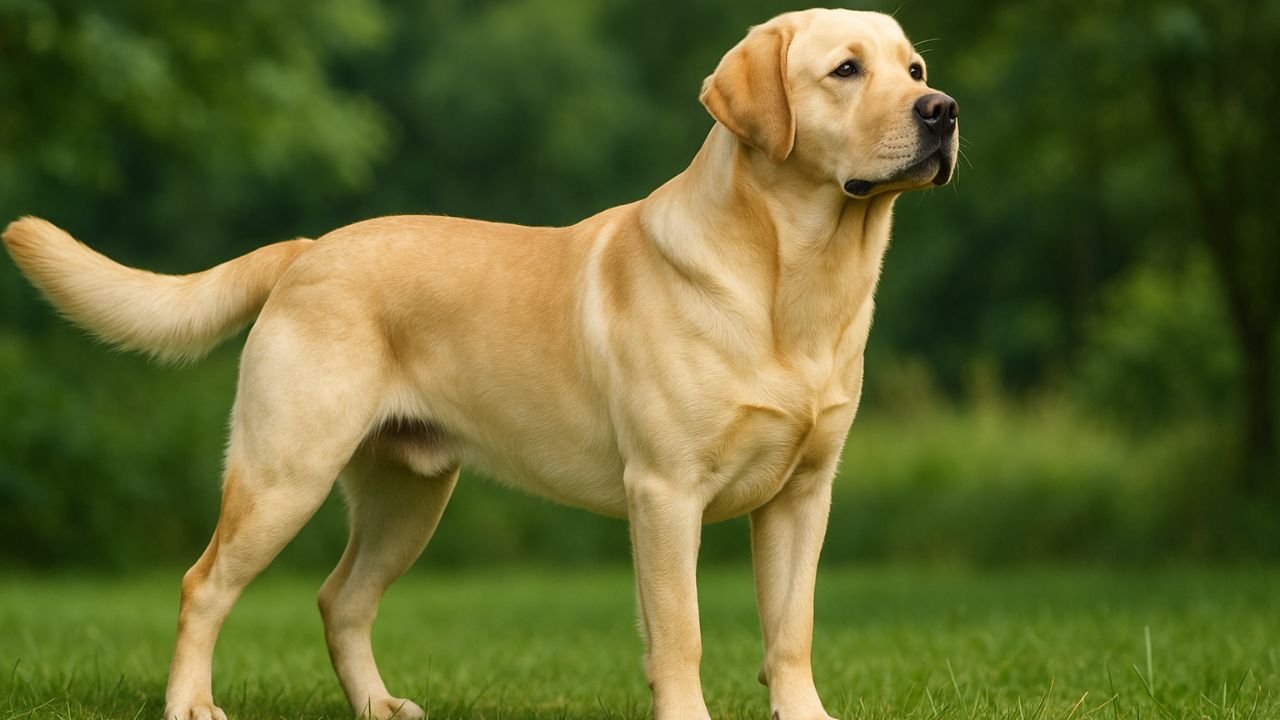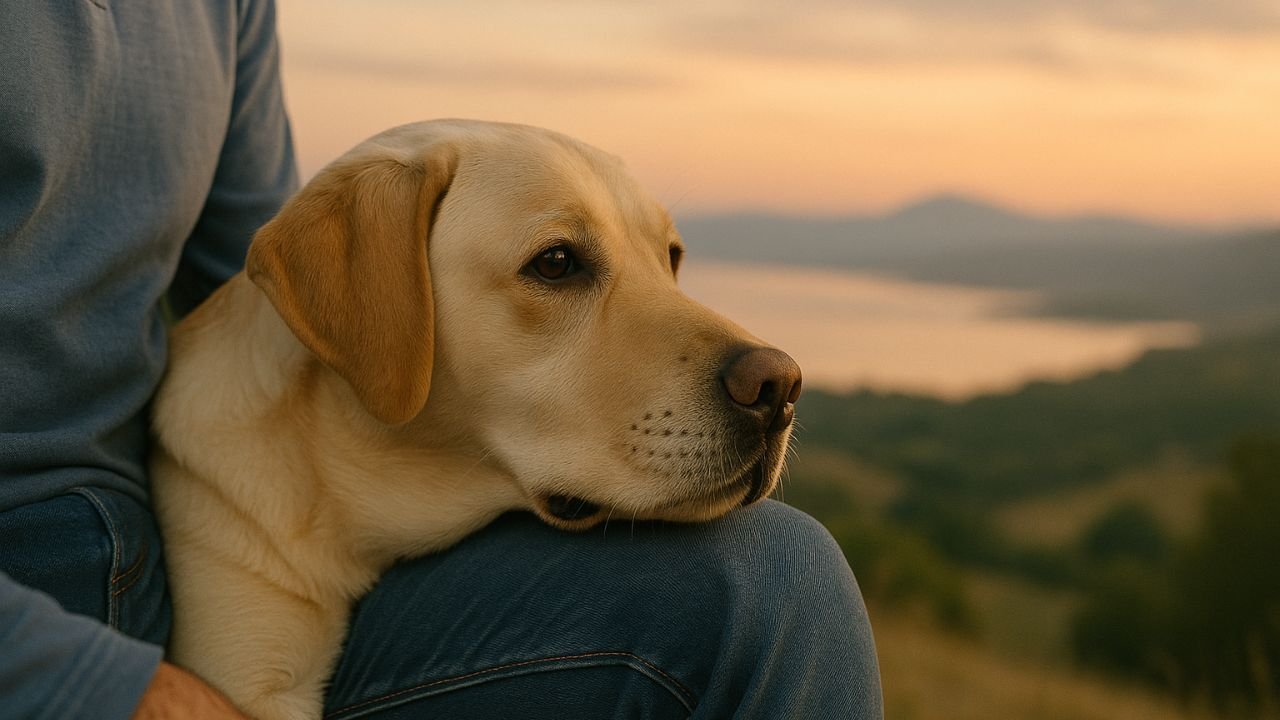
Have you ever wondered about the true origins of your loyal, water-loving Labrador Retriever? While their friendly wag and eager-to-please nature are instantly recognizable, the full story of the Labrador Retriever origin and history is a fascinating tale, often shrouded in common misconceptions. This journey takes us from the icy shores of 19th-century Newfoundland to the refined kennels of British noblemen, ultimately shaping the beloved companion we know today.
A Beloved Breed, A Hidden Past
The Labrador Retriever consistently holds the title as one of the world’s most popular dog breeds, cherished for its intelligence, versatility, and famously amiable disposition. A testament to its widespread appeal, the American Kennel Club (AKC) has recognized the Labrador as the most popular breed in the United States for an astounding 31 consecutive years AKC. Yet, beneath this familiar and adored exterior lies a rich and often misunderstood Labrador breed history, deeply rooted in the harsh, demanding working conditions of its ancestral home.
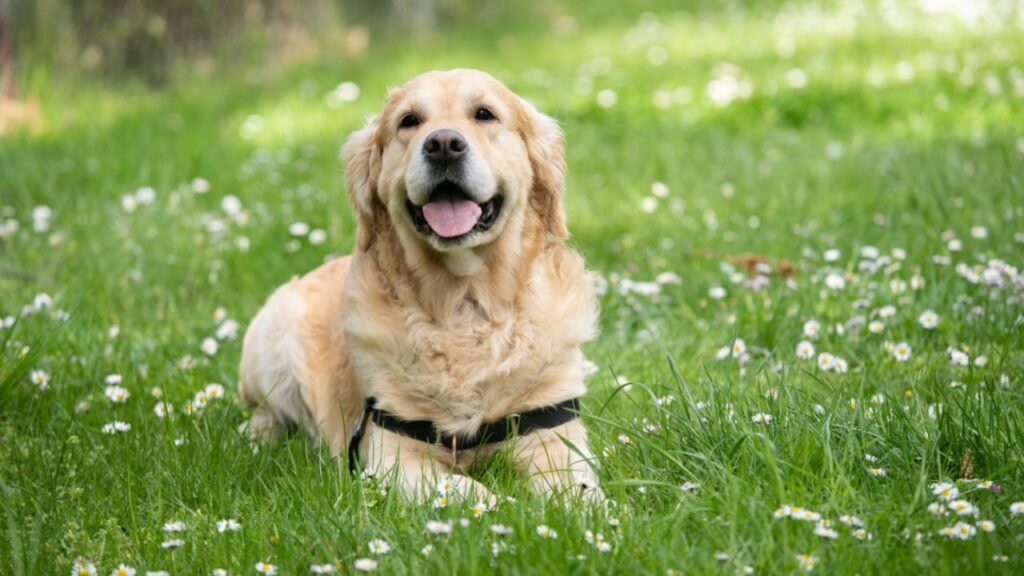
Why the Labrador’s History Matters
Understanding the evolution of Labradors and their true ancestry is not merely a historical curiosity; it’s crucial for appreciating their inherent traits. Their strong retrieving instincts, an undeniable love for water, and that characteristic eager-to-please temperament aren’t random quirks but direct legacies of their working past. This historical context provides invaluable insight into why Labradors are predisposed to certain behaviors, physical attributes, and even health considerations, thereby guiding responsible ownership, training practices, and ethical breeding decisions The Kennel Club. It helps us understand the breed’s needs and how to best care for these remarkable dogs.
What You’ll Discover
This article will embark on a comprehensive exploration of the Labrador’s true ancestry, meticulously tracing its lineage from the now-extinct St. John’s Water Dog of Newfoundland. We will follow its development and refinement in England, examining the pivotal roles played by British noblemen, and finally, its evolution into the versatile working dog and cherished family companion we adore today. Prepare to uncover the key figures, historical events, and environmental pressures that shaped this remarkable breed, revealing the full scope of the Labrador Retriever origin and history.
Key Takeaways
- The Labrador Retriever is a globally popular breed with a deep, often overlooked, history.
- Its history is essential for understanding its characteristic traits and ensuring responsible care.
- The breed’s journey began with the St. John’s Water Dog in Newfoundland and was shaped in England.
The Mysterious Origins: From Newfoundland to the World
To truly understand the Labrador Retriever origin and history, we must first journey back to the rugged, windswept coasts of 19th-century Newfoundland, Canada. Here, amidst the bustling fishing communities, a remarkable canine companion was forged by necessity and environment: the St. John’s Water Dog. This hardy, intelligent breed is the undisputed ancestor of our modern Labrador, a fact that often surprises those who mistakenly link Labs directly to the larger Newfoundland dog.
The St. John’s Water Dog: The True Ancestor
The St. John’s Water Dog was a medium-sized canine, perfectly adapted to the harsh maritime environment of its native land. Unlike the shaggy, massive Newfoundland dog, the St. John’s dog possessed a short, dense, and remarkably water-resistant double coat, most commonly black in color. This coat provided essential insulation against the frigid North Atlantic waters.
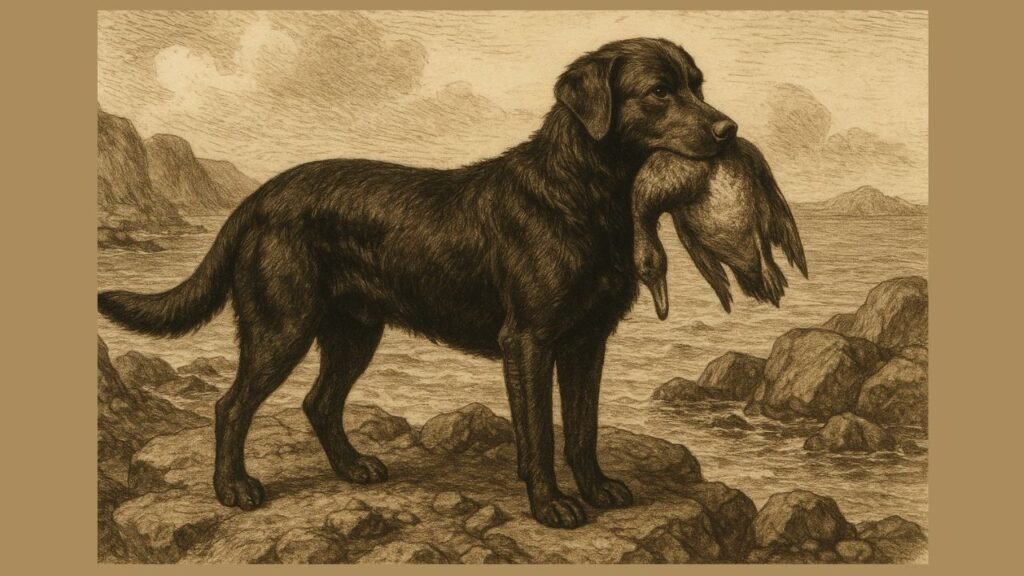
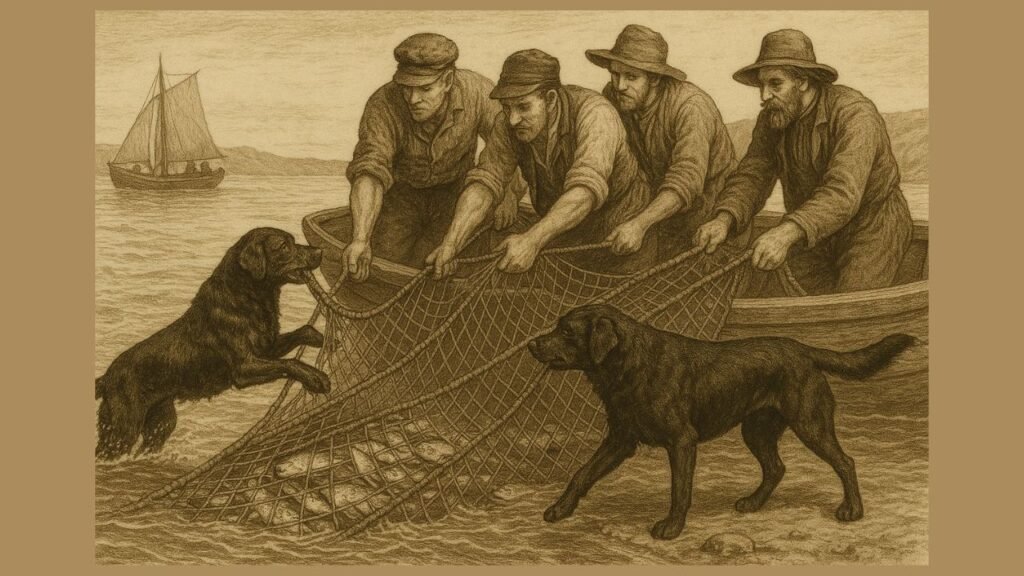
A defining feature was its distinctive “otter” tail—thick at the base and tapering to a point, which served as an efficient rudder, aiding in navigation and balance while swimming Britannica. Furthermore, these dogs were equipped with webbed feet, making them truly exceptional swimmers. Their primary purpose was to assist local fishermen, tirelessly retrieving fishing lines, nets, and any fish that had escaped the hooks from the icy waters AKC. Their intelligence, hardiness, and an innate eagerness to please made them indispensable working partners, capable of enduring long hours in challenging conditions.
Characteristics and Purpose of the St. John’s Dog
- Physical Attributes:
- Dense, oily, water-shedding double coat for insulation.
- Powerful, rudder-like “otter tail” for propulsion and steering.
- Webbed feet for maximum swimming efficiency.
- Medium-sized, agile build.
- Temperament & Working Ability:
- Keen intelligence and quick learning ability.
- Unwavering desire to work alongside human companions.
- Hardy and able to endure long hours in challenging conditions.
- Ideal “water dogs” for the demanding fishing industry, embodying the very essence of Labrador ancestry.
Life and Work in 19th Century Newfoundland
In the bustling fishing villages of 19th-century Newfoundland, the St. John’s Water Dog was not merely a pet but an integral, respected member of the community. They worked tirelessly alongside their owners, often spending hours in the frigid waters, retrieving equipment and fish. Their robust constitution allowed them to withstand the harsh maritime climate, and their strong retrieving drive was perfectly suited for their specialized role. Historical accounts describe them as loyal, good-natured, and highly trainable—traits that are still hallmarks of the modern Labrador Retriever . Their daily lives were a testament to their dedication and the symbiotic relationship they shared with the fishermen.
Distinguishing from the Newfoundland Dog
A common and persistent misconception is that the Labrador Retriever is a direct descendant of the much larger Newfoundland dog. While both breeds share Newfoundland dog origins, they are distinct and evolved for different purposes. Understanding this distinction is key to grasping the true Labrador ancestry.
Physical Differences and Temperament
To clarify the distinction between the St. John’s Water Dog (ancestor of the Labrador) and the Newfoundland dog, consider the following comparison:
| Characteristic | St. John’s Water Dog (Labrador Ancestor) | Newfoundland Dog |
|---|---|---|
| Size & Weight | Medium-sized, 50-70 pounds | Massive, often exceeding 150 pounds |
| Coat Type | Short, dense, water-resistant double coat | Thick, shaggy, long double coat |
| Agility | More agile, suited for retrieving from small boats | Less agile, built for power and endurance |
| Primary Role | Specialized retriever (fishing lines, nets, fish) | Heavy hauling, water rescue, guarding |
| Temperament | Active, energetic, focused retrieving nature | Stoic, protective, gentle giant temperament |
The St. John’s Water Dog typically weighed around 50-70 pounds, a manageable size for retrieving from small boats. In stark contrast, the Newfoundland could easily exceed 150 pounds AKC Newfoundland, with a thick, shaggy coat designed for heavy-duty work and extreme cold. The Newfoundland dog was bred for heavy hauling, water rescue, and guarding, exhibiting a more stoic, protective, and gentle giant temperament compared to the St. John’s dog’s active, energetic, and focused retrieving nature Britannica Newfoundland.
Divergent Working Roles and Development
While both breeds originated in Newfoundland and shared an affinity for water, their working roles diverged significantly. The St. John’s dog was a specialized retriever, focusing on speed, agility, and a “soft mouth” for delicate retrieval tasks in water. The Newfoundland, on the other hand, was a powerful draft dog, capable of pulling heavy carts, assisting with fishing nets, and performing water rescues of drowning victims. Their distinct purposes led to different breeding priorities and physical developments, confirming they were separate, albeit geographically related, breeds with unique contributions to canine history The Kennel Club Newfoundland.
Labrador Retriever behavior: Understanding Your Lab’s Traits
Early European Interest and Export
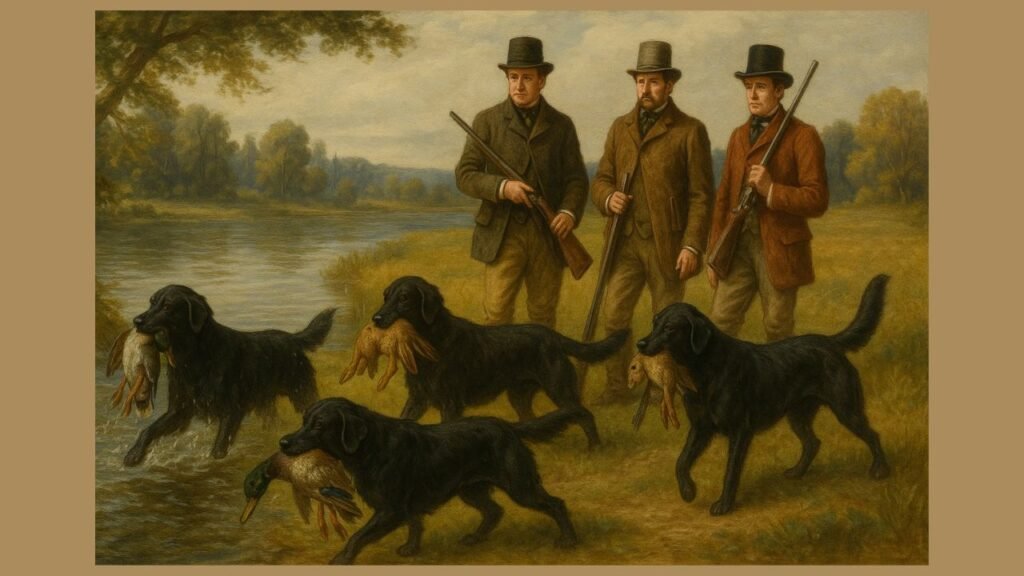
The exceptional abilities of the St. John’s Water Dog did not go unnoticed. During the early 19th century, British noblemen and sportsmen visiting Newfoundland were captivated by these dogs’ unparalleled retrieving skills, particularly for waterfowl hunting. They quickly recognized the St. John’s dogs’ superior abilities compared to the existing British gundogs of the era. This fascination would prove pivotal in the evolution of Labradors.
British Noblemen and Sportsmen’s Fascination
Key figures in this early appreciation included the 2nd Earl of Malmesbury and the 5th Duke of Buccleuch. These influential individuals were instrumental in importing these remarkable dogs to England, seeing their potential to revolutionize game retrieval on their vast estates. They were particularly impressed by the dogs’ stamina, intelligence, and their natural aptitude for retrieving game from both land and water, even in challenging conditions Their foresight laid the groundwork for the breed’s future.
Initial Imports to England: The Foundation Stock
The first St. John’s Water Dogs were imported to England around the 1830s. The 2nd Earl of Malmesbury is widely credited with importing some of the earliest specimens, and notably, he referred to them as “Labrador dogs” in his correspondence as early as 1835. These imported dogs, along with those brought by the Duke of Buccleuch and other enthusiasts, formed the crucial foundation stock. It was from these initial imports that the modern Labrador breed history would truly begin to take shape, developed and refined in Great Britain to become the breed we recognize today.
Key Takeaways
- The St. John’s Water Dog, not the Newfoundland, is the true ancestor of the Labrador Retriever.
- St. John’s dogs were medium-sized, short-coated, and specialized in retrieving from icy waters for fishermen.
- British noblemen imported these dogs to England in the early 19th century, forming the breed’s foundation.
The Journey to Recognition: Shaping the Breed in England
With the St. John’s Water Dogs established on British soil, a new chapter in the Labrador breed history began. English noblemen, recognizing the immense potential of these dogs, embarked on a dedicated breeding program that would refine their working abilities and solidify their physical characteristics, ultimately leading to the formal recognition of the Labrador Retriever as a distinct breed.
Early Breeding Efforts and the “Labrador” Name
The informal naming of these dogs played a significant role in their identity. The 2nd Earl of Malmesbury, a key figure in the early imports, began referring to his imported St. John’s Water Dogs as “Labrador dogs” in his letters as early as the 1830s. This name likely stemmed from their origin in the Labrador region of Newfoundland, or perhaps the Labrador Sea itself This informal convention eventually stuck, becoming the official breed name and marking a pivotal moment in the Labrador Retriever origin and history.
The Influence of the 3rd Earl of Malmesbury and the Duke of Buccleuch
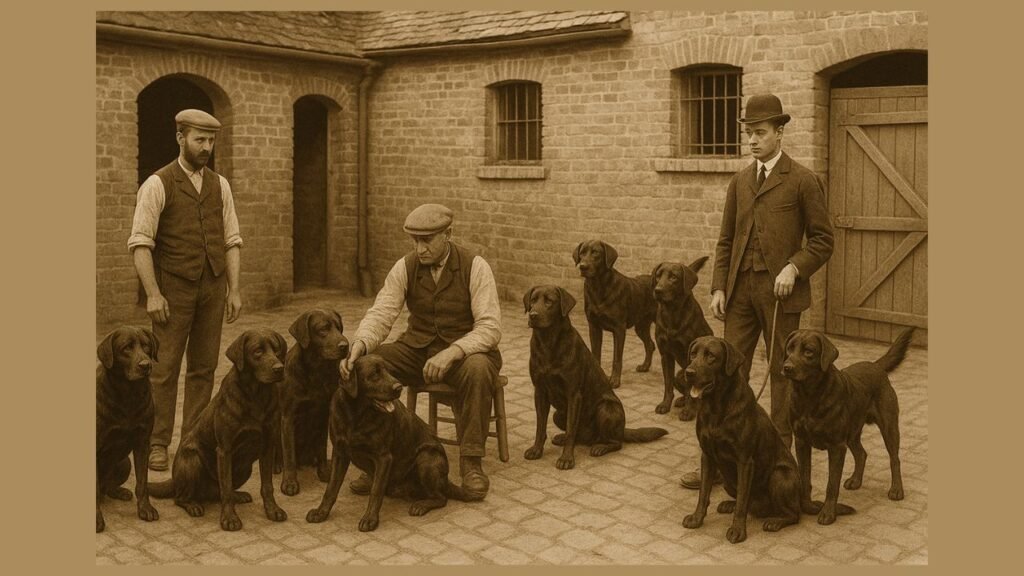
The most significant breeding efforts that truly shaped the Labrador Retriever took place in the mid-19th century, primarily through the collaborative work of the 3rd Earl of Malmesbury and the 6th Duke of Buccleuch. These dedicated breeders worked tirelessly to preserve and refine the St. John’s Water Dog’s exceptional retrieving abilities, focusing on intelligence, biddable temperaments, and a strong work ethic. The Duke of Buccleuch’s kennels, in particular, played a pivotal role, with dogs like “Buccleuch Avon” and “Buccleuch Ned” being key ancestors of the modern breed. Their meticulous breeding programs ensured that the desirable traits were passed down, cementing the foundation for the evolution of Labradors as premier gundogs.
Establishing Breed Standards and Purpose
As breeding efforts progressed, a clear vision for the Labrador’s purpose emerged, leading to the establishment of specific breed standards that emphasized both working ability and physical suitability.
Focus on Working Ability and Retrieval Instincts
Early English breeders prioritized the St. John’s Water Dog’s inherent working abilities above all else. The primary focus was on developing a dog with:
- An exceptional retrieving instinct.
- A “soft mouth” (the ability to carry game without damaging it).
- High intelligence.
- An unwavering desire to please its handler.
These traits were paramount for their intended role as gundogs, retrieving fowl from both land and water, often over long distances and in challenging terrain. The Labrador was to be a reliable, efficient, and tireless partner in the field.
Defining Physical Traits for Optimal Performance
Physical characteristics were also carefully refined to enhance working performance:
- The short, dense, water-resistant double coat, inherited from its St. John’s ancestors, was crucial for protection in cold water and harsh weather.
- The distinctive “otter tail” was not just a cosmetic feature but provided essential balance and a rudder-like function during powerful swimming.
- A strong, athletic build, powerful jaws capable of carrying game, and a keen sense of smell were also emphasized.
These ensured the Labrador was perfectly adapted for its demanding retrieving tasks. Every aspect of the breed’s development was geared towards creating the ultimate working retriever.
Challenges and Near Extinction in Newfoundland
While the St. John’s Water Dog was thriving and evolving into the Labrador Retriever in England, its fate in its native Newfoundland took a tragic turn, leading to its near extinction.
The Impact of Dog Taxes and Import Restrictions
In the mid-19th century, Newfoundland implemented heavy dog taxes, particularly targeting female dogs, as a measure to discourage dog ownership and support the burgeoning sheep farming industry. This economic pressure significantly reduced the breeding population of St. John’s Water Dogs. Concurrently, strict quarantine laws in England made it increasingly difficult, and eventually impossible, to import new stock from Newfoundland. This combination of factors effectively isolated the remaining St. John’s dogs in their homeland, cutting off the supply of fresh genetic material to England and hindering their survival in Newfoundland..
The Fading Presence of the St. John’s Water Dog
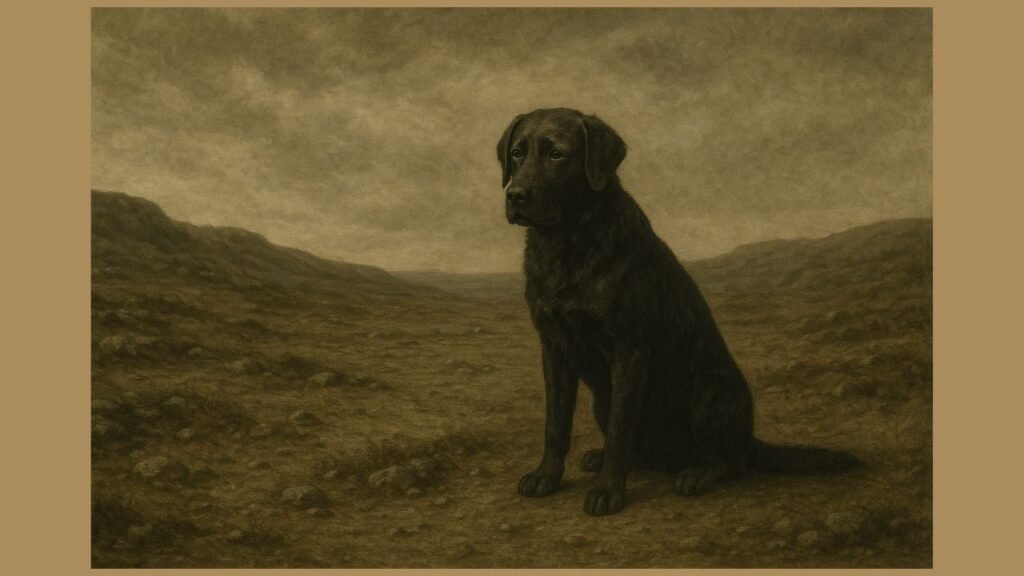
These combined pressures led to the precipitous decline and eventual near extinction of the St. John’s Water Dog in Newfoundland by the early 20th century. The last known St. John’s Water Dog was reportedly sighted in the 1980s, a poignant reminder of a lost breed. However, as a distinct entity, the breed had effectively vanished from its homeland decades earlier, surviving only through its descendants in Great Britain, who had been carefully bred and developed into the Labrador Retriever Britannica.
Official Recognition and Breed Consolidation
The dedicated efforts of English breeders eventually culminated in formal recognition, solidifying the Labrador Retriever’s place in the canine world.
The Kennel Club (UK) Recognition and Early Shows
The Labrador Retriever gained official recognition as a distinct breed by The Kennel Club (UK) in 1903. This formal acknowledgment was a landmark event, solidifying its status and paving the way for the establishment of detailed breed standards and organized showing. Early dog shows played a crucial role in consolidating the breed’s characteristics, promoting its development, and increasing its visibility among dog enthusiasts.
American Kennel Club (AKC) Acceptance and Growth
Across the Atlantic, the American Kennel Club (AKC) officially recognized the Labrador Retriever in 1917. The breed’s popularity in the United States steadily grew, particularly after World War II, as its versatility and amiable temperament made it a favored choice for both hunting and companionship. This recognition marked the beginning of the Labrador’s ascent to becoming one of the most beloved breeds in North America, further contributing to the rich Labrador breed history.
Key Takeaways
- The name “Labrador” was coined by the 2nd Earl of Malmesbury in the 1830s.
- English noblemen, particularly the 3rd Earl of Malmesbury and the Duke of Buccleuch, were crucial in establishing the breed’s working standards.
- Dog taxes and import restrictions led to the near extinction of the St. John’s Water Dog in Newfoundland.
- The Labrador Retriever was officially recognized by The Kennel Club (UK) in 1903 and the AKC in 1917.
Evolution of the Modern Labrador: From Working Dog to Family Companion
Following its official recognition, the Labrador Retriever embarked on a new phase of its evolution of Labradors, transitioning from a specialized gundog to a multifaceted companion capable of excelling in countless roles. This period saw the breed’s characteristics further refined and diversified, cementing its place as a global favorite.
Post-Recognition Development and Diversification
The breed’s growing popularity and diverse applications led to a natural diversification within the Labrador population.
The Rise of Show Lines vs. Working Lines
After official recognition, the Labrador Retriever began to diverge into distinct lines: “show lines” (often referred to as English Labradors) and “working lines” (also known as American Field Labs). While both types retain the core Labrador temperament, these differences can significantly influence their suitability for various roles and family environments, making it important for prospective owners to understand the distinction.
| Characteristic | Show Lines (English Labradors) | Working Lines (American Field Labs) |
|---|---|---|
| Primary Breeding Focus | Conformation to breed standard for appearance | Performance in field trials and hunting |
| Build & Physique | Heavier, more substantial build, broader head | Leaner, more athletic physique |
| Energy Levels | Generally calmer, more laid-back demeanor | Higher energy levels, intense drive |
| Typical Activities | Conformation shows, family pets | Field trials, hunting, active sports |
Show lines are primarily bred to conform strictly to the breed standard for appearance, often resulting in a heavier, more substantial build, a broader head, and a generally calmer, more laid-back demeanor. Their focus is on the conformation ring.
Working lines, conversely, are bred for performance in field trials and hunting, typically exhibiting a leaner, more athletic physique, higher energy levels, and an intense drive for retrieving.
Expanding Roles: Assistance, Search & Rescue, and Therapy
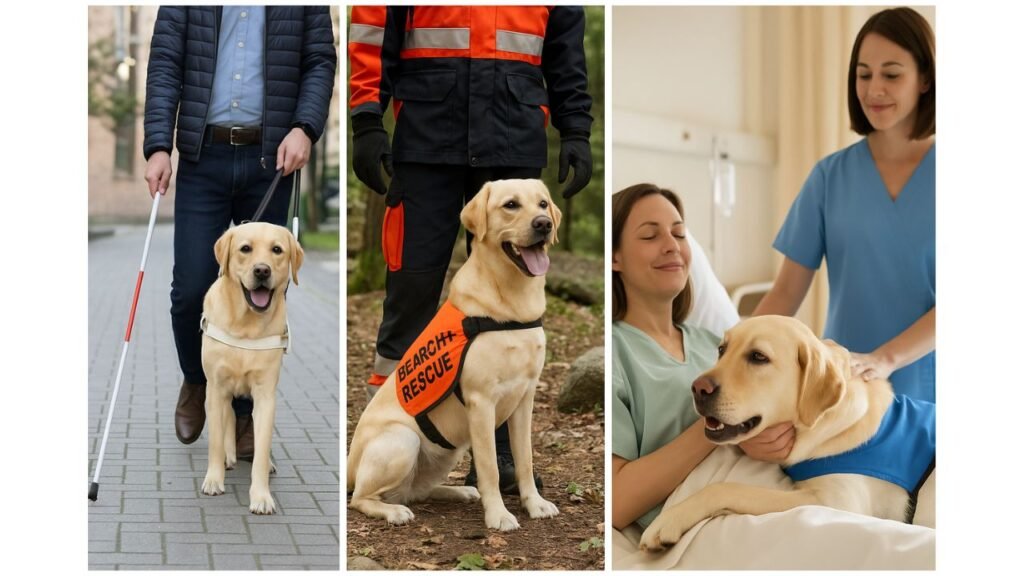
The Labrador’s inherent intelligence, exceptional trainability, stable temperament, and unwavering eagerness to please have allowed it to excel far beyond its original retrieving role. They are widely recognized as premier assistance dogs, serving as compassionate guide dogs for the blind, attentive hearing dogs for the deaf, and invaluable service dogs for individuals with a wide range of disabilities. Their keen sense of smell, a legacy of their hunting past, makes them indispensable in search and rescue operations and detection work (e.g., narcotics, explosives, even cancer detection). Furthermore, their gentle and affectionate nature makes them ideal therapy dogs, providing comfort and support in hospitals, schools, and nursing homes, demonstrating the incredible versatility in the evolution of Labradors.
The Labrador’s Enduring Popularity and Adaptability
The Labrador Retriever’s journey from a working dog to a global icon is a testament to its remarkable adaptability and universally appealing qualities.
Temperament: The Hallmark of the Breed
The Labrador Retriever’s unparalleled popularity is largely attributed to its exemplary temperament. They are renowned for being:
- Friendly and outgoing.
- Good-natured and patient.
- Highly tolerant, making them excellent family pets, even with children and other animals
- Intelligent and highly trainable, responsive to commands and eager participants in activities.
However, their energetic nature, especially in their younger years, requires consistent exercise and mental stimulation to prevent boredom and destructive behaviors. A well-exercised Labrador is a happy and well-behaved Labrador.
Global Appeal and Cultural Impact
The Labrador’s appeal transcends geographical boundaries, consistently ranking as a top breed in many countries worldwide, including the UK, Canada, and Australia FCI Standard. Their presence in popular culture, from heartwarming roles in films to prominent features in advertising campaigns, further solidifies their status as a global icon, symbolizing loyalty, companionship, and an active, joyful lifestyle. This widespread recognition underscores the success of the Labrador Retriever origin and history in creating a truly beloved breed.

Preserving the Legacy: Responsible Breeding and Health
To ensure the continued health and integrity of the breed, responsible breeding practices are paramount.
Maintaining Breed Integrity and Health Standards
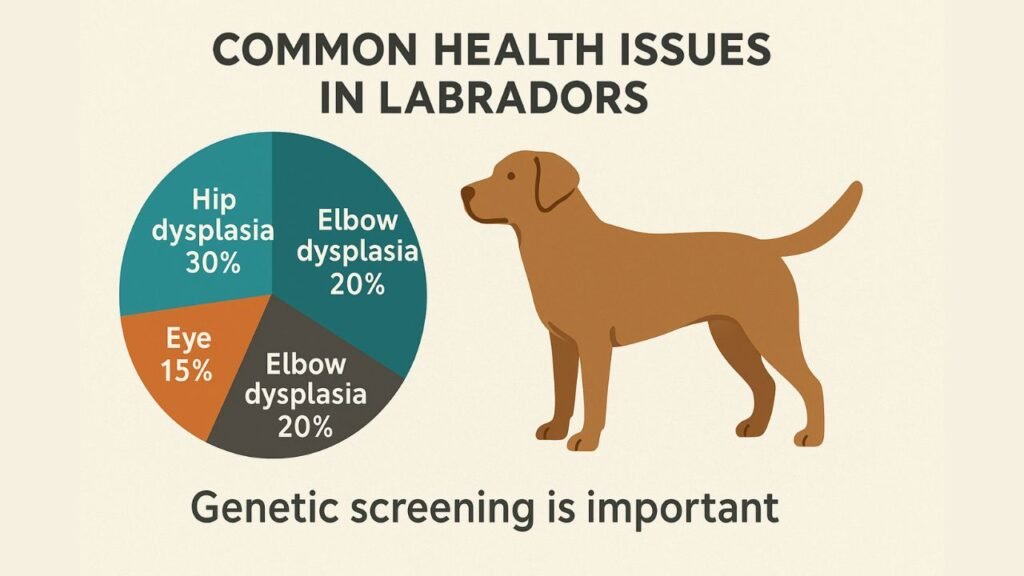
Responsible breeding is paramount to preserving the Labrador’s legacy. Ethical breeders focus on maintaining the breed’s characteristic temperament and working abilities while prioritizing health above all else. This involves extensive health screenings of breeding stock for genetic conditions common in the breed, such as hip and elbow dysplasia, various eye diseases (like Progressive Retinal Atrophy), and certain heart conditions. These screenings, often certified by organizations like the Orthopedic Foundation for Animals (OFA), help ensure that only healthy dogs are used for breeding, thereby reducing the incidence of inherited diseases in future generations Orthopedic Foundation for Animals (OFA).
Addressing Common Health Concerns in Labradors
While generally robust, Labradors are prone to several inherited health issues that prospective owners should be aware of. Genetic testing for conditions like PRA and EIC is available and highly recommended for breeding dogs to reduce the incidence of these diseases in future generations Animal Health Trust (now part of Kennel Club Genetics Centre). Prospective owners should always inquire about health clearances and genetic test results from breeders to ensure they are bringing home the healthiest possible puppy.
| Common Health Concern | Description / Impact | Prevalence / Note |
|---|---|---|
| Hip Dysplasia | Malformation of the hip joint, leading to arthritis and pain. | Approx. 10-15% prevalence in the breed Journal of the American Veterinary Medical Association. |
| Elbow Dysplasia | Abnormal development of the elbow joint, causing lameness. | Common orthopedic concern. |
| Progressive Retinal Atrophy (PRA) | Degenerative eye disease leading to eventual blindness. | Genetic testing available. |
| Exercise-Induced Collapse (EIC) | Neurological disorder causing weakness and collapse after intense exercise. | Genetic testing available. |
| Cardiac Conditions | Various heart conditions can affect the breed. | Regular veterinary check-ups recommended. |
Key Takeaways
- Labradors have diversified into show and working lines, each with distinct characteristics.
- Their versatility extends to vital roles as assistance, search & rescue, and therapy dogs.
- The breed’s friendly temperament and adaptability are key to its enduring global popularity.
- Responsible breeding and health screenings are crucial for addressing common health concerns like hip/elbow dysplasia and genetic eye conditions.
Conclusion: A Legacy of Loyalty and Love
The journey of the Labrador Retriever is a truly remarkable narrative, a testament to the enduring bond between humans and dogs, and the profound impact of selective breeding. From its humble beginnings as a hardy working dog in the frigid waters of Newfoundland to its current status as a cherished global companion, the Labrador Retriever origin and history is a story of purpose, adaptation, and unwavering loyalty.
Recap of the Labrador’s Remarkable Journey
We’ve traced the Labrador’s lineage from:
- The now-extinct St. John’s Water Dog, an indispensable partner to 19th-century fishermen.
- Its path across the Atlantic, where discerning British noblemen recognized and meticulously refined its retrieving prowess, ultimately giving it the name “Labrador.”
- Its formal recognition by major kennel clubs and its subsequent diversification into distinct lines, all while its original homeland saw its ancestor fade away.
This evolution underscores the profound impact of human selection and environmental pressures on breed development, shaping a dog perfectly suited for both demanding work and loving companionship.
The Enduring Spirit of the Labrador Retriever
Despite the centuries and the vast geographical distances, the core traits that made the St. John’s Water Dog invaluable—its intelligence, eagerness to please, exceptional retrieving prowess, and a gentle, biddable nature—have been meticulously preserved and even enhanced in the modern Labrador. This enduring spirit of loyalty, coupled with an innate desire to work and connect deeply with humans, defines the breed’s character. It is this combination of traits that has allowed the evolution of Labradors to thrive and capture hearts worldwide.
Final Reflections on a Global Icon
Today, the Labrador Retriever stands as more than just a popular pet; it is a global icon, symbolizing companionship, dedicated service, and unwavering devotion. Its rich Labrador breed history serves as a powerful reminder of the deep, symbiotic bond between humans and dogs, and the incredible journey of a breed shaped by purpose, passion, and a legacy of loyalty and love that continues to enrich countless lives around the world.
Key Takeaways
- The Labrador’s history is a journey from a working dog in Newfoundland to a global companion.
- Its core traits of intelligence, loyalty, and retrieving prowess have been preserved throughout its evolution.
- The Labrador Retriever is a global icon, embodying companionship and service.
Frequently Asked Questions
01. What is the true ancestor of the modern Labrador Retriever?
The true ancestor of the modern Labrador Retriever is the now-extinct St. John’s Water Dog, which originated in 19th-century Newfoundland, Canada. These medium-sized, short-coated dogs were indispensable partners to local fishermen, known for their water-resistant double coats, “otter” tails, and webbed feet, perfectly adapted for retrieving fishing lines and nets from icy waters. It’s a common misconception that the larger Newfoundland dog is their direct ancestor; while both share Newfoundland origins, they evolved for distinct purposes.
02. Why is the Labrador Retriever called “Labrador”?
The name “Labrador” was first informally applied to these dogs by the 2nd Earl of Malmesbury in his correspondence as early as 1835. He was one of the British noblemen who imported the St. John’s Water Dogs to England. The name likely stemmed from their origin in the Labrador region of Newfoundland, or perhaps the Labrador Sea itself, where their ancestors, the St. John’s Water Dogs, tirelessly worked alongside fishermen. This informal convention eventually stuck and became the breed’s official name.
03. How did the St. John’s Water Dog become nearly extinct in its native Newfoundland?
The St. John’s Water Dog faced near extinction in Newfoundland due to a combination of factors in the mid-19th century. Heavy dog taxes, particularly on female dogs, were implemented to discourage dog ownership and support the burgeoning sheep farming industry, drastically reducing the breeding population. Concurrently, strict quarantine laws in England made it increasingly difficult, and eventually impossible, to import new stock from Newfoundland, cutting off genetic material. These pressures led to the breed’s precipitous decline and eventual disappearance from its homeland by the early 20th century, surviving only through its descendants in Great Britain.
04. What role did British noblemen play in the development of the Labrador Retriever?
British noblemen and sportsmen played a pivotal role in shaping the Labrador Retriever. Figures like the 2nd Earl of Malmesbury and the 5th Duke of Buccleuch were captivated by the St. John’s Water Dogs’ retrieving skills during visits to Newfoundland in the early 19th century. They imported these dogs to England, recognizing their potential to revolutionize game retrieval. The 3rd Earl of Malmesbury and the 6th Duke of Buccleuch then led dedicated breeding programs, meticulously refining the St. John’s Water Dog’s exceptional retrieving abilities, intelligence, biddable temperament, and strong work ethic, ultimately establishing the foundation for the modern Labrador Retriever as a premier gundog.
05. What are the main differences between “show lines” and “working lines” of Labradors?
After official recognition, Labradors began to diverge into “show lines” (often called English Labs) and “working lines” (also known as American Field Labs), bred for different focuses. Show lines are primarily bred for conformation to breed standards, resulting in a heavier, more substantial build, broader head, and a generally calmer demeanor, suitable for conformation rings and family pets. Working lines, conversely, are bred for performance in field trials and hunting, exhibiting a leaner, more athletic physique, higher energy levels, and an intense drive for retrieving. While both retain the core Labrador temperament, their physical traits and energy levels differ based on their breeding focus.